Specialized Ophthalmology in Seoul · Dedicated International Patient Concierge
MOHW Registered · Foreign Patient Care
en-US

Specialty Overview
Implantable Lens Surgery
ICL and EVO AQUA ICL implant surgery at Jamsil Samsung Eye Clinic in Seoul: vision correction without corneal tissue removal, led by Dr. Cha Deok Sun.
Schedule a ConsultationImplantable Lens Surgery

Medically reviewed by Dr. Cha Deok Sun, ophthalmologist & Ph.D. at Jamsil Samsung Eye Clinic, Seoul, specializes in cataract, presbyopia & ICL surgery.
Implantable lens surgery is a vision-correction procedure in which a corrective lens is placed between the iris and the eye's natural lens, without removing or reshaping the cornea. At Jamsil Samsung Eye Clinic in Songpa-gu, Seoul, this specialty covers EVO AQUA ICL and T-ICL (Toric ICL) implantation for patients who are not well suited to LASIK, LASEK, or other corneal laser procedures.
What Is Implantable Lens Surgery?
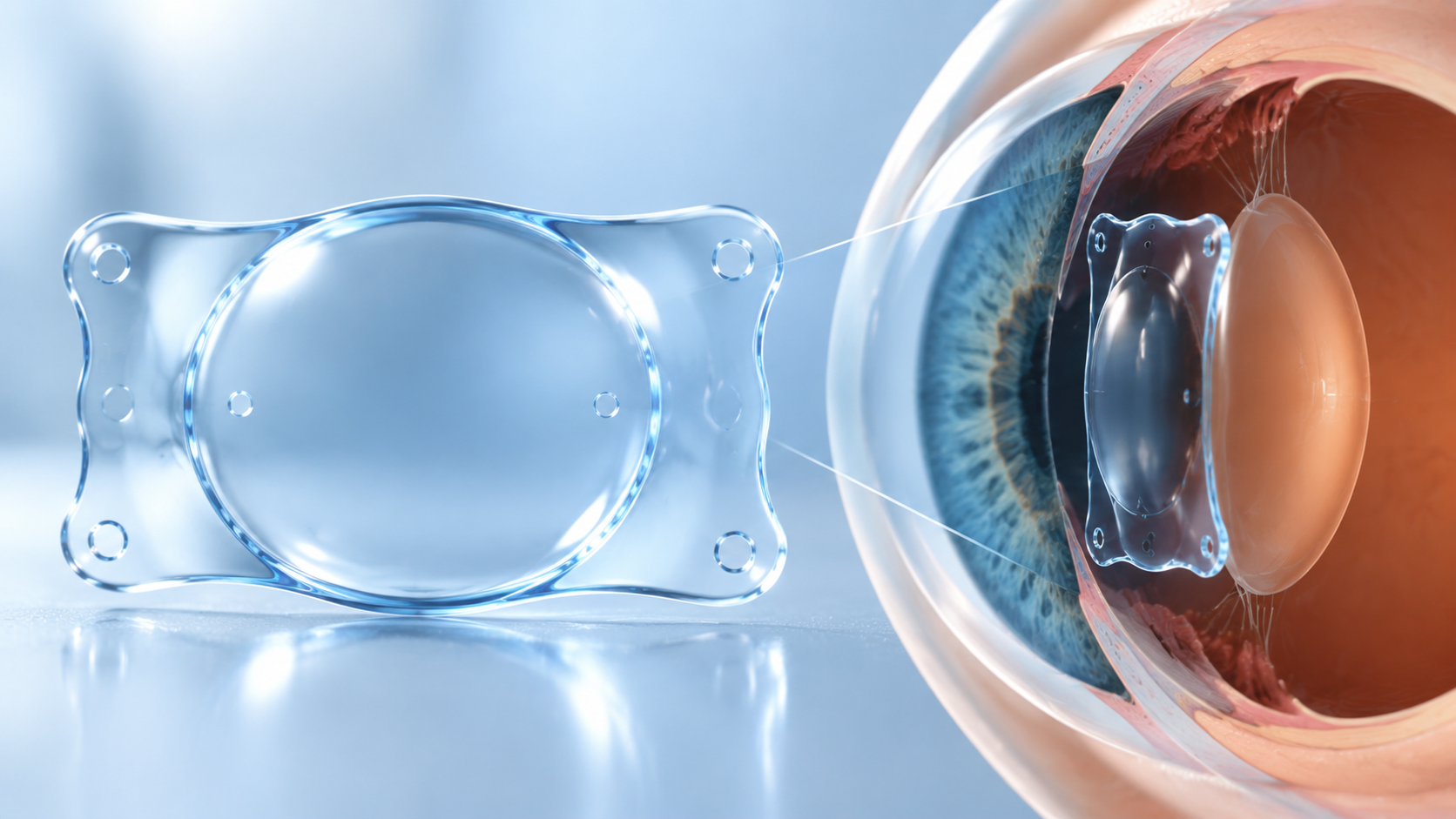
Implantable lens surgery, commonly called ICL, corrects refractive error by placing a biocompatible lens inside the eye rather than by reshaping the cornea with a laser.
The lens is positioned between the iris and the eye's natural crystalline lens, leaving corneal tissue untouched.
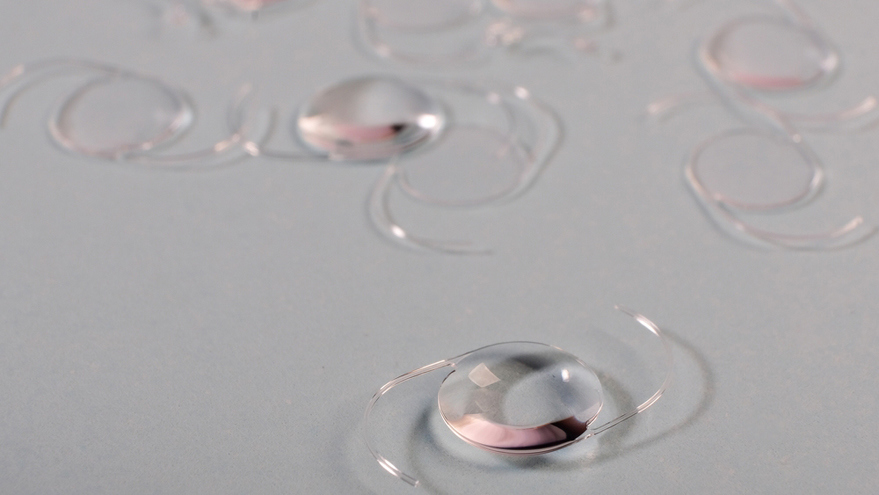
EVO AQUA ICL uses a Collamer-material lens with a built-in central micro-hole (the "Aqua Hole") that allows natural aqueous humor flow, removing the need for a separate iridotomy.
T-ICL (Toric ICL) is a toric version of the same lens family, designed to correct myopia combined with meaningful astigmatism.
Because no corneal tissue is removed, the procedure is generally considered for patients with very high myopia or corneas too thin for laser vision correction.
The lens is designed to be removable if medically necessary, though removal is itself a further surgical procedure.
Who Performs Implantable Lens Surgery at Jamsil Samsung Eye Clinic

Dr. Cha Deok Sun
Ophthalmologist and Ph.D. holder
Dr. Cha Deok Sun, an ophthalmologist at Jamsil Samsung Eye Clinic, specializes in vision correction surgery, presbyopia and cataract surgery, and Implantable Collamer Lens (ICL) procedures. He holds a Ph.D. in Medicine and has extensive clinical experience in corneal, cataract, and refractive surgery.
Dr. Cha completed his residency training in the Department of Ophthalmology at Korea University Hospital and further advanced his expertise through a clinical fellowship in Cornea and Cataract at Seoul National University. His professional background includes serving as Former Head Physician (1st Department) at Pyeongtaek Kim's Eye Clinic and as a Dedicated Surgeon at Cheonho ELC Eye Clinic.
He has been recognized internationally for his research contributions, including receiving 2nd Place in Poster Presentation at the European Society of Cataract and Refractive Surgeons (ESCRS) in 2016 and obtaining a patent related to intraocular lens technology used in cataract surgery in 2018.
Dr. Cha is an active member of leading ophthalmology organizations, including the Korean Ophthalmological Society, Korean Society of Cataract and Refractive Surgery (KSCRS), American Society of Cataract and Refractive Surgery (ASCRS), and European Society of Cataract and Refractive Surgeons (ESCRS). His research and academic work have contributed to advancements in cataract surgery techniques, intraocular lens technology, corneal protection, and refractive correction.
Implantable Lens Options Available
| Lens | Designed For | Key Feature |
|---|---|---|
| EVO AQUA ICL | High myopia or thin corneas not suited to laser correction | Central micro-hole (Aqua Hole) allows natural aqueous flow without a separate iridotomy |
| T-ICL (Toric ICL) | Myopia combined with meaningful astigmatism | Toric lens design corrects astigmatism alongside myopia |
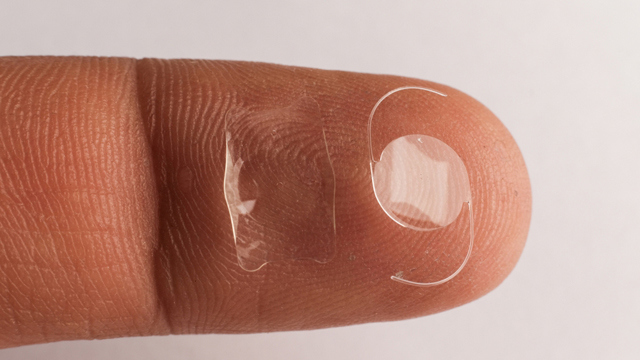
EVO AQUA ICL is inserted through a small incision of about 3.0 mm at the edge of the cornea, using a specialized injector to position the lens behind the iris and secure it between the iris and the natural crystalline lens. Because the lens sits behind the iris, it is not visible from the outside. The clinic states that the procedure is reversible, carries a low risk of dry eye, and includes UV protection built into the lens material.
T-ICL (Toric ICL) follows a similar surgical approach, with the folded toric lens inserted and aligned specifically to correct astigmatism alongside myopia. In the United States, an EVO/EVO+ Visian Toric ICL is FDA-approved for qualifying patients generally aged 21–45 with specified myopic astigmatism ranges and adequate anterior chamber depth.
Who Is a Good Candidate for Implantable Lens Surgery
Patients with severe high myopia or significant astigmatism who may not be well suited to corneal laser correction.
Patients with corneas too thin for LASIK, LASEK, or similar procedures.
Generally aged 18 or older (21–45 for the FDA-approved EVO/EVO+ Visian indications), with stable vision for at least six months.
Adequate anterior chamber depth and eye anatomy, confirmed through a full dilated eye examination including a retina check.
Not suitable for patients who are pregnant or within three months of finishing breastfeeding, or whose eye anatomy or medical history increases surgical risk.
What to Expect: Procedure, Recovery, and Results Timeline
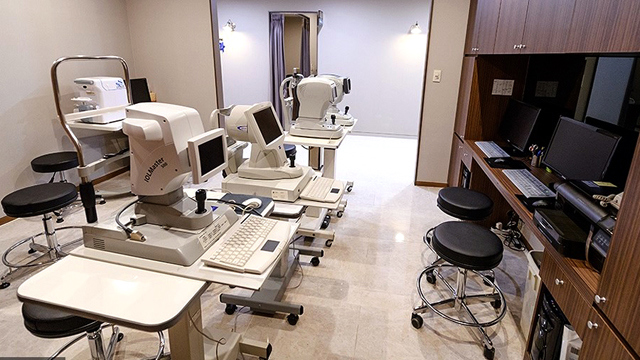
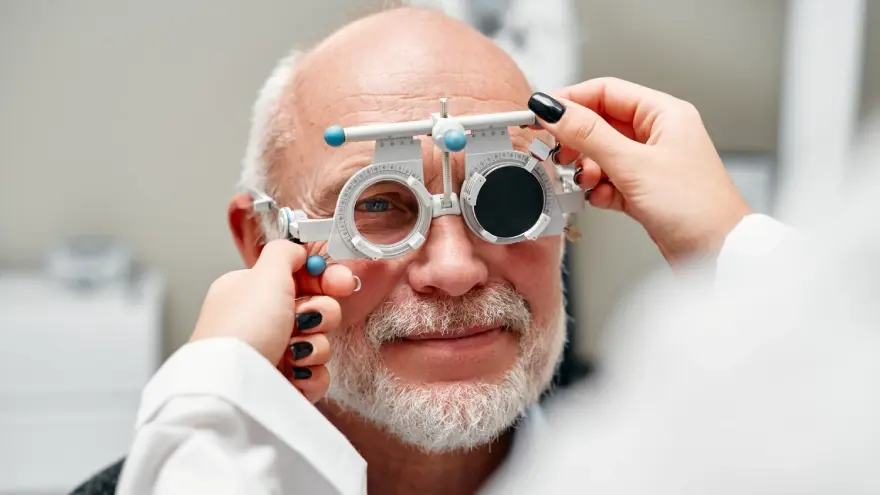
Before surgery, patients undergo a full dilated eye examination, including a retina check, to confirm suitability and select the correct lens type and power; near vision may be blurry for about a day after dilation, so morning appointments are recommended so that any temporary eye-pressure spikes can be monitored throughout the day. The clinic advises stopping soft contact lenses seven days beforehand, toric or hard lenses fourteen days beforehand, and orthokeratology lenses about a month beforehand, so the natural corneal shape can be measured accurately. Numbing eye drops are used during the procedure, so patients typically feel little to no pain. The lens itself is inserted through a roughly 3.0 mm incision and takes about ten minutes of surgical time per eye, with a total visit — including pre-operative checks, doctor consultation, and post-operative instructions — of about one to two hours. Because the incision is small, daily activities can generally resume the next day, and basic skincare or light makeup can be applied soon after surgery. A temporary increase in intraocular pressure can occur on the day of surgery, which is why the clinic monitors patients with a same-day pressure check.
Pre-operative preparation is structured around a defined timeline:
| Timing | Instruction |
|---|---|
| 1 month before | Stop wearing orthokeratology (Dream Lens) lenses so the natural corneal shape can be measured accurately. |
| 2 weeks before | Stop wearing astigmatism-correcting soft or hard contact lenses. |
| 1 week before | Stop soft contact lenses; consult your physician about pausing blood thinners, aspirin, warfarin, or prostate medications, and inform the clinic of all current prescriptions. Routine blood-pressure or diabetes medications are generally continued as usual. |
| 3 days before | Begin prescribed antibiotic and anti-inflammatory eye drops, generally four times daily. |
| Day before | Rest well; avoid alcohol and heavy exertion. |
| Day of surgery | No makeup, perfume, or hair products (basic skin lotion is permitted); arrange transportation rather than self-driving, since pupil-dilating drops will be used; morning appointments are generally recommended so post-operative eye pressure can be monitored through the day. |
Afterward, patients apply prescribed antibiotic eye drops as directed, undergo a same-day post-operative pressure check, and attend the scheduled follow-up examinations that monitor visual acuity, intraocular pressure, and lens position while the eye settles. The clinic advises contacting the treating eye specialist promptly if severe pain, sudden vision loss, or marked redness occurs at any point during recovery.
How Implantable Lens Surgery Compares with Corneal Laser Procedures
Because implantable lens surgery and corneal laser procedures correct vision through fundamentally different mechanisms, the clinic evaluates both pathways during the same initial consultation rather than assuming one is automatically preferable. LASIK and Z8 Premium LASIK create a small lenticule or flap within the cornea and remove it through a micro-incision, offering rapid recovery for patients whose corneal thickness and refractive error fall within typical laser-treatable ranges. LASEK-based procedures remove the corneal epithelium before laser correction, which can suit some thinner corneas but generally involves a longer initial healing phase. Implantable lens surgery, by contrast, leaves the cornea structurally untouched altogether, which is why it is generally reserved for patients whose myopia, astigmatism, or corneal thickness places them outside the range where a laser-based method is expected to perform well. Because the natural crystalline lens is left in place and only a corrective lens is added in front of it, the procedure is also, unlike a laser reshaping of the cornea, in principle reversible if a specific medical reason for removal arises later.
International Patient Considerations
Patients traveling from abroad to evaluate implantable lens surgery are typically weighing whether their degree of myopia or corneal thickness makes them a better candidate for ICL than for a corneal laser procedure, along with how many days to plan for in Korea around the pre-operative examination, the procedure itself, and same-day post-operative monitoring. Because eligibility depends on a full dilated eye examination — including anterior chamber depth and retina assessment — candidacy is generally confirmed at the in-person consultation rather than beforehand, and international patients should build their travel schedule around that examination and its findings rather than around an assumption that a specific lens has already been selected before arrival.
Safety, Precision, and Clinic Standards
The EVO AQUA ICL uses a biocompatible Collamer-material lens with built-in UVA and UVB protection. The lens's central micro-hole allows natural aqueous humor flow, which the clinic states removes the need for a separate iridotomy before implantation. Numbing eye drops are used rather than general anesthesia, and the surgical incision is limited to approximately 3.0 mm. Same-day monitoring of intraocular pressure is standard practice after implantation. Recognized risks of implantable lens surgery include infection, inflammation, increased intraocular pressure, glare or halos, lens displacement or rotation, and, less commonly, cataract formation — risks that the FDA's own review of implantable collamer lenses has also documented, which is why careful pre-operative screening and scheduled follow-up examinations are central to the clinic's approach, rather than treating the implantation itself as the end of the patient's care.
Combining Implantable Lens Surgery with Other Treatments
EVO AQUA ICL can be combined with corneal collagen cross-linking (CXL) for patients who need additional corneal stromal support alongside lens implantation.
Patients initially evaluated for LASIK, LASEK, or Clear Smile LASIK who are found unsuitable for a corneal laser procedure may be reassessed for EVO AQUA ICL or T-ICL instead, without needing to repeat their full diagnostic work-up.
The Bottom Line
Implantable lens surgery corrects vision by placing a lens inside the eye rather than reshaping the cornea, making it an option for patients not suited to laser vision correction.
EVO AQUA ICL and T-ICL are both reversible, biocompatible-lens procedures performed through a small, roughly 3.0 mm incision.
Dr. Cha Deok Sun, whose primary specialization is refractive surgery and a member of ASCRS, ESCRS, and the AAO, personally manages his patients' pre- and post-operative care.
Candidacy depends on eye anatomy, corneal thickness, and refractive stability, confirmed through a full dilated eye examination.
Recognized risks include infection, inflammation, elevated eye pressure, and lens displacement; results are not guaranteed for every patient.
Frequently Asked Questions
How is implantable lens surgery different from LASIK? LASIK reshapes the cornea with a laser, while implantable lens surgery (ICL) places a corrective lens inside the eye, between the iris and the natural lens, without removing any corneal tissue — which is why it is often considered for patients with very high myopia or corneas too thin for laser correction.
Is EVO AQUA ICL visible to other people? No. The lens is positioned behind the iris, so it is not visible from the outside.
Can the implanted lens be removed later? Yes. The lens is designed to be removable if medically necessary, although removal is itself a further surgical procedure, and the clinic recommends discussing this only if a specific medical reason arises.
Who is a good candidate for T-ICL specifically? T-ICL is generally considered for patients with myopia combined with meaningful astigmatism, adequate anterior chamber depth, and stable refraction, confirmed through a comprehensive eye examination that includes lens sizing and vault assessment.
What happens during recovery after ICL surgery? Because the incision is small, most patients can resume daily activities the next day, though the clinic still schedules follow-up examinations to monitor visual acuity, intraocular pressure, and lens position during healing.
What are the main risks of implantable lens surgery? Recognized risks include infection, inflammation, increased intraocular pressure, glare or halos, lens displacement or rotation, and, less commonly, cataract formation — which is why careful pre-operative screening and scheduled follow-up are part of the clinic's protocol for every patient.
Will I need to stop wearing contact lenses before my consultation? Yes. The clinic asks patients to stop soft contact lenses about a week before measurements, astigmatism-correcting soft or hard lenses about two weeks before, and orthokeratology (Dream Lens) lenses about a month before, so the eye's natural shape and refractive error can be measured accurately.
Does implantable lens surgery treat presbyopia as well? No. Implantable lens surgery corrects myopia and, for T-ICL, astigmatism, but it does not address presbyopia, the age-related loss of near-focusing ability, which is a separate condition evaluated and treated under the clinic's Presbyopia Care specialty.
Book a Consultation at Jamsil Samsung Eye Clinic
To find out whether EVO AQUA ICL or T-ICL may be suitable for you, contact Jamsil Samsung Eye Clinic in Songpa-gu, Seoul, through its online consultation and contact page or by phone at +82-2-424-7523.
Disclaimer
This page is for general informational purposes and does not constitute individualized medical advice. Surgical candidacy, technique, and expected outcomes can only be determined through a consultation with a qualified physician.
Sources & Further Reading
Related Services
Ophthalmology procedures available across our clinical departments.

EVO AQUA ICL (Implantable Collamer Lens)
EVO AQUA ICL is a vision-correction procedure in which a specialized corrective lens made of biocompatible Collamer material is inserted directly between the natural lens and the iris, without damaging or reshaping the cornea.
Learn More

Presbyopia Surgery (Clareon PanOptix Pro)
Presbyopia surgery with the Clareon PanOptix Pro trifocal lens corrects presbyopia — the age-related loss of near-focusing ability caused by the eye's lens stiffening and losing elasticity, combined with reduced ciliary-muscle function — by implanting a
Learn More
Presbyopia Precision Exam Program
The Presbyopia Precision Exam Program is a specialized diagnostic evaluation designed to thoroughly measure eye health, corneal state, and refractive index before prescribing presbyopia correction or laser vision procedures.
Learn More