Specialized Ophthalmology in Seoul · Dedicated International Patient Concierge
MOHW Registered · Foreign Patient Care
en-US

Presbyopia Care · Needs Clinic Confirmation
Presbyopia Precision Exam Program
The Presbyopia Precision Exam Program is a specialized diagnostic evaluation designed to thoroughly measure eye health, corneal state, and refractive index before prescribing presbyopia correction or laser vision procedures.
Schedule a ConsultationPresbyopia Precision Exam Program
Medically reviewed by Dr. Cha Deok Sun, Director, Ophthalmologist (Ph.D.), board-certified, Korean Ophthalmological Society
The Presbyopia Precision Exam Program is a specialized diagnostic evaluation designed to thoroughly measure eye health, corneal state, and refractive index before prescribing presbyopia correction or laser vision procedures. At Jamsil Samsung Eye Clinic in Songpa-gu, Seoul, this diagnostic-only program combines the clinic's advanced imaging platforms into a single comprehensive visit, without requiring any surgical decision on the same day.
What Is the Presbyopia Precision Exam Program?
Framing this program correctly matters: it is a diagnostic service, similar in spirit to a specialist consultation with detailed imaging, rather than a treatment or surgery, and patients should not expect any corrective procedure to be performed during the exam visit itself.
This program is a diagnostic evaluation, not a treatment itself, intended to accurately diagnose age-related vision changes and determine the safest, most effective customized correction option.
The program is designed to accurately diagnose presbyopia, rule out underlying ocular conditions such as cataracts or glaucoma, and determine the safest, most effective customized vision-correction treatment.
It combines university-hospital-level advanced diagnostic machinery with individualized, AI-assisted diagnostic evaluation systems to build a high-precision, customized patient profile.
Diagnostic results are generated immediately during the consultation visit and remain valid for several months, serving as the benchmark blueprint for any subsequent corrective procedure.
The exam itself is non-invasive and painless, requiring no anesthesia, though diagnostic eye drops such as dilation or numbing drops for pressure checks may be administered as needed.
Alternative options evaluated through the exam include laser presbyopia correction, multifocal intraocular lens insertion, or traditional corrective glasses — the exam does not commit a patient to any one of these in advance.
Who Oversees the Presbyopia Precision Exam Program at Jamsil Samsung Eye Clinic

Having the same specialist who would ultimately perform any recommended surgery also review and interpret the exam findings helps ensure that the diagnostic results translate directly into a coherent, individualized treatment recommendation.
Dr. Cha Deok Sun, a director at Jamsil Samsung Eye Clinic, is a board-certified ophthalmologist with a Ph.D. in medicine whose core specializations are presbyopia surgery, cataract surgery, and vision-correction surgery. He completed his ophthalmology residency at Korea University Hospital and a cornea and cataract fellowship at Seoul National University, and holds a 2018 patent for an intraocular lens used in cataract and presbyopia surgery. He is a full member of the Korean Ophthalmological Society, the Korean Society of Cataract and Refractive Surgery, the American Society of Cataract and Refractive Surgery (ASCRS), and the European Society of Cataract and Refractive Surgeons (ESCRS).
Who Is a Good Candidate for This Exam Program
Because the exam does not itself involve any surgical decision, it is also a reasonable, low-pressure starting point for patients who are simply curious about their presbyopia status and available treatment options but are not yet certain whether they want to pursue any corrective procedure at all.
Individuals experiencing age-related near-vision difficulty or reading fatigue who want a thorough diagnostic evaluation before deciding on any treatment.
Patients evaluating eligibility for presbyopia laser surgery, multifocal lens implants, or cataract surgery who want their eligibility confirmed before committing to a specific procedure.
Not suitable, or requiring deferral, for individuals with active severe corneal infections, uncontrolled systemic conditions affecting healing, or acute inflammatory eye conditions, who may need to defer the exam until stabilized.
What to Expect: The Exam Process and Results Timeline
The process follows four steps: pre-test patient history intake and initial vision assessment; refractive power measurement and corneal topography mapping; a detailed anterior segment and fundus exam to screen for cataracts, retina conditions, and glaucoma; and diagnostic evaluation by the specialist team leading to a treatment-strategy recommendation. The exam itself requires no anesthesia and is described as non-invasive and painless; diagnostic eye drops, such as dilation or numbing drops for pressure checks, may be used as needed during the visit. The comprehensive exam program typically requires about one to two hours in a single outpatient visit.
Any temporary blurriness or light sensitivity from pupil-dilating drops typically subsides within about three to six hours, so patients are advised to bring sunglasses to their appointment and avoid driving until the drops' effects wear off. Diagnostic results are generated immediately during the consultation visit and remain valid for several months, serving as the benchmark blueprint for whichever corrective procedure, if any, is ultimately pursued. No recovery timeline is required for the diagnostic testing itself, since it does not involve surgery.
Before the exam, patients should temporarily refrain from wearing soft contact lenses for about one week and hard or orthokeratology (Dream) lenses for about two to three weeks prior to precision testing, allowing the cornea to return to its natural shape for accurate measurement. Afterward, aftercare is minimal: bring sunglasses to protect light-sensitive eyes following pupil dilation, and avoid driving until the dilating eye-drop effects wear off.
Safety, Precision, and Clinic Standards
Because the exam is diagnostic rather than surgical, most patients find it a comfortable, low-stress way to finally get concrete answers about symptoms they may have been managing informally for some time.
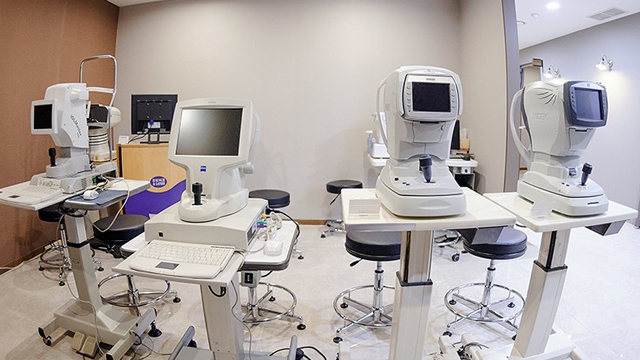
The clinic's diagnostic platforms combine the Zeiss Triple A MEL 90, Ziemer Femto LDV Z8, ALCON INFINITI, and AVEDRO XTRA systems for precise ocular measurements and surgical planning, layered with individualized, AI-assisted diagnostic evaluation to deliver a high-precision, customized patient profile. Diagnostic examinations carry negligible physical risk; the main consideration is temporary light sensitivity or blurred near vision if pupil-dilating drops are used during the exam, which is why sunglasses and a no-driving period are recommended immediately afterward.
Why a Dedicated Diagnostic Program Matters
Presbyopia can sometimes be confused with, or occur alongside, other treatable eye conditions such as cataracts or glaucoma, and the symptoms a patient notices — blurred near vision, reading fatigue — do not by themselves distinguish between these possibilities. The Presbyopia Precision Exam Program is specifically structured to screen for these overlapping conditions at the same visit, rather than assuming presbyopia is the sole explanation for a patient's symptoms. This diagnostic-first approach also means patients are not asked to commit to a specific surgical procedure before the relevant measurements — corneal topography, refractive power, and a full anterior and posterior segment exam — are actually available to guide that decision.
International Patient Considerations
International patients often use the Presbyopia Precision Exam Program as a low-commitment first step before deciding whether to pursue laser correction, multifocal lens surgery, or a non-surgical option, since the exam itself requires only a single one-to-two-hour outpatient visit with no surgical downtime. This can make it a practical way to obtain a detailed, individualized diagnostic profile on a shorter trip, with the results — valid for several months — available to guide a follow-up visit later for whichever treatment is ultimately chosen, if any. Patients planning to combine this exam with surgery on the same trip should still allow separate time for the surgical procedure and its own preparation and recovery requirements, since the exam alone does not include treatment. Contact lens wearers should also plan their one-to-three-week lens-free window before the exam, rather than assuming they can complete this after arriving in Seoul.
Combining This Exam with Other Care

The presbyopia precision exam can be combined with screening for cataracts, glaucoma, dry eye syndrome, and retinal conditions in the same comprehensive visit, since much of the same diagnostic equipment and anterior/posterior segment examination is relevant across these conditions.
Patients sometimes hesitate to schedule a dedicated diagnostic exam, assuming a routine vision check would cover the same ground, but the equipment and testing sequence used in the Presbyopia Precision Exam Program — corneal topography, dedicated anterior segment and fundus evaluation, and AI-assisted pattern analysis — goes beyond what a standard vision screening typically includes, which is part of why the program exists as a distinct offering rather than being folded into a routine checkup.
This upfront diagnostic clarity is precisely the value the program is designed to offer.
The Bottom Line
The Presbyopia Precision Exam Program is a diagnostic evaluation, not a treatment, intended to confirm presbyopia and rule out overlapping conditions before recommending a correction option.
The one-to-two-hour exam combines advanced imaging platforms with AI-assisted evaluation to build a detailed, individualized patient profile.
Results remain valid for several months and serve as the benchmark for whichever treatment, if any, is eventually pursued.
Dr. Cha Deok Sun's core specialization in presbyopia and cataract surgery supports the interpretation and treatment planning that follows this exam.
The exam itself carries negligible physical risk and requires no anesthesia, though temporary light sensitivity from dilating drops is common.
Frequently Asked Questions
Do I have to decide on a treatment during the Presbyopia Precision Exam? No — the exam is a diagnostic evaluation, not a treatment decision point; it is specifically designed to give you and your doctor the measurements needed to discuss options such as laser correction, multifocal lens surgery, or glasses afterward, without committing you to any one path on the day of the exam.
How long does the exam take, and is it painful? The comprehensive exam typically takes about one to two hours in a single outpatient visit, and it is non-invasive and painless, requiring no anesthesia; some temporary light sensitivity or blurred near vision may occur if pupil-dilating drops are used.
What conditions does this exam screen for besides presbyopia? Beyond confirming presbyopia, the exam is designed to screen for cataracts, glaucoma, and other retinal conditions during the same anterior segment and fundus evaluation, since symptoms like blurred near vision can sometimes overlap with these other conditions.
How long are my exam results valid for? Diagnostic results are generated immediately during the visit and generally remain valid for several months, serving as a benchmark blueprint for treatment planning during that period.
Do I need to stop wearing contact lenses before this exam? Yes — soft contact lenses should generally be stopped about a week beforehand, and hard or orthokeratology (Dream) lenses about two to three weeks beforehand, so that corneal measurements reflect your eye's natural shape.
Can this exam rule out other eye conditions besides presbyopia? Yes — the exam's anterior segment and fundus evaluation is specifically designed to screen for cataracts, glaucoma, and other retinal conditions alongside confirming presbyopia, so a patient who assumed their symptoms were purely age-related near-vision changes may also learn about a separate, unrelated finding during the same visit.
What happens after I get my exam results? Your doctor reviews the diagnostic findings with you and discusses which correction options — laser vision correction, multifocal lens surgery, or non-surgical approaches such as glasses — are realistic given your specific results, without requiring you to commit to any of them on the day of the exam itself.
Book a Consultation at Jamsil Samsung Eye Clinic
To schedule a Presbyopia Precision Exam and receive a detailed, individualized diagnostic profile, contact Jamsil Samsung Eye Clinic in Songpa-gu, Seoul, through its online consultation and contact page or by phone at +82-2-424-7523.
Disclaimer
This page is for general informational purposes only and does not constitute individualized medical advice. Diagnostic findings and treatment recommendations can only be determined through evaluation by a qualified physician.
Sources & Further Reading
Other Services
Explore additional ophthalmology treatments offered by our specialists.
EVO AQUA ICL (Implantable Collamer Lens)
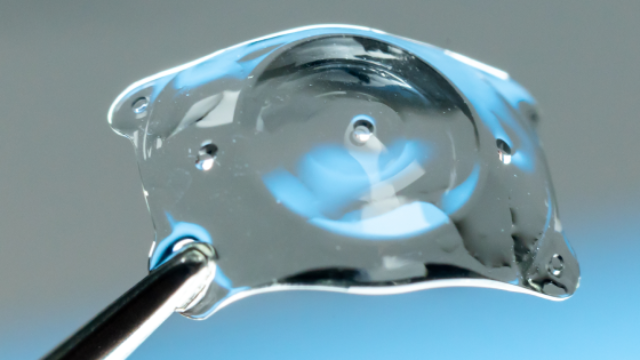
EVO AQUA ICL is a vision-correction procedure in which a specialized corrective lens made of biocompatible Collamer material is inserted directly between the natural lens and the iris, without damaging or reshaping the cornea.
Learn More

Presbyopia Surgery (Clareon PanOptix Pro)
Presbyopia surgery with the Clareon PanOptix Pro trifocal lens corrects presbyopia — the age-related loss of near-focusing ability caused by the eye's lens stiffening and losing elasticity, combined with reduced ciliary-muscle function — by implanting a
Learn More
Presbyopia Precision Exam Program
The Presbyopia Precision Exam Program is a specialized diagnostic evaluation designed to thoroughly measure eye health, corneal state, and refractive index before prescribing presbyopia correction or laser vision procedures.
Learn More