Specialized Ophthalmology in Seoul · Dedicated International Patient Concierge
MOHW Registered · Foreign Patient Care
en-US


Vision Correction Surgery · Needs Clinic Confirmation
Pre/Post-Surgery Care
Pre/Post-Surgery Care covers the preparation required before, and the recovery support provided after, vision-correction surgery at Jamsil Samsung Eye Clinic in Songpa-gu, Seoul.
Schedule a ConsultationPre/Post-Surgery Care (Vision Correction)

Medically reviewed by Dr. Kim Byoung Jin, Representative Director, Ophthalmologist (Ph.D.), board-certified, Korean Ophthalmological Society
Pre/Post-Surgery Care covers the preparation required before, and the recovery support provided after, vision-correction surgery at Jamsil Samsung Eye Clinic in Songpa-gu, Seoul. Delivered through the clinic's SMART Total Care program, this structured approach applies across the clinic's laser and lens-based vision-correction options, from Clear Smile LASIK and Z8 Premium LASIK to LASEK and ICL.
What Is Pre/Post-Surgery Care for Vision Correction?
Pre/Post-Surgery Care is the preparation and recovery framework that surrounds every vision-correction procedure at the clinic, rather than a treatment in its own right.
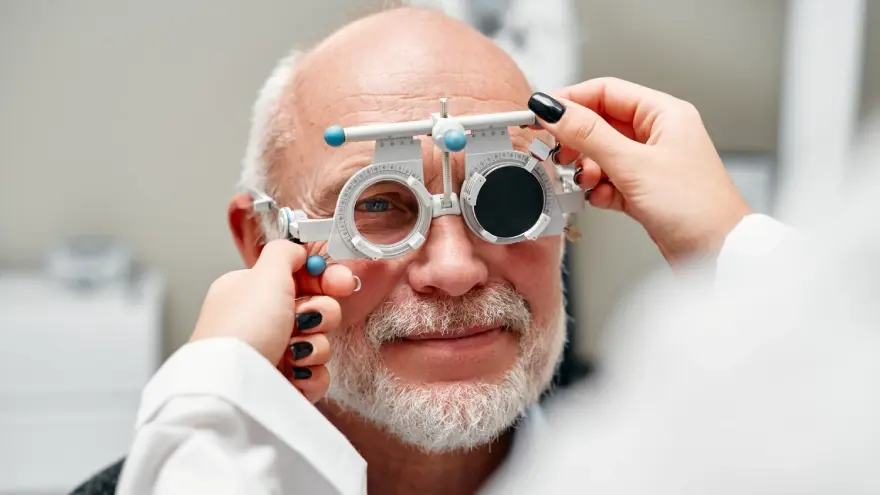
Preoperative care includes detailed eye examinations and assessment of factors affecting vision before surgery, such as corneal topography and pupil measurement.
Postoperative care includes prescribed eye drops, activity restrictions, and scheduled follow-up visits tailored to the specific procedure performed.
The clinic's SMART program provides Total Care, meaning coordinated pre- and post-operative management delivered by the same team that performs the procedure.
Proper adherence to preparation and aftercare instructions supports safe recovery, helps manage discomfort, and supports visual recovery.
Specific instructions vary by procedure — a LASEK patient's aftercare needs differ from those of an ICL or Z8 Premium LASIK patient — so exact guidance is individualized at the time of treatment.
Who Oversees Pre/Post-Surgery Care at Jamsil Samsung Eye Clinic

Dr. Kim Byoung Jin, Representative Director and a board-certified ophthalmologist (Ph.D.) at Jamsil Samsung Eye Clinic, lists refractive and vision-correction surgery among his core clinical specializations and personally manages his patients' pre- and post-operative care rather than delegating it separately. He completed a fellowship at Samsung Seoul Hospital and postdoctoral research at Columbia University Hospital, and is a full member of the Korean Society of Cataract and Refractive Surgery (KSCRS), the American Society of Cataract and Refractive Surgery (ASCRS), the European Society of Cataract and Refractive Surgeons (ESCRS), and the American Academy of Ophthalmology (AAO).
Who Needs Pre/Post-Surgery Care Guidance
Even patients who feel confident about their choice of procedure benefit from reviewing preparation and aftercare details well before their surgery date, since some steps — particularly stopping contact lens wear for the required window — must be completed in advance and cannot be compressed at the last minute without compromising the accuracy of preoperative measurements.
Every patient undergoing vision-correction surgery at the clinic, regardless of which specific procedure is selected, needs individualized pre- and post-operative instructions.
Patients who cannot safely undergo their planned procedure — for example, due to an active eye infection or unstable medical condition — should postpone surgery until medically cleared, following the same preoperative evaluation that identifies this need.
International patients in particular benefit from understanding the full preparation and recovery timeline in advance, since it affects how they plan travel around their procedure.
What to Expect: Preparation Before Surgery
Preparation before any vision-correction procedure begins with a comprehensive eye examination, including corneal topography and pupil measurement, to confirm candidacy and plan the specific technique. Contact lens wearers must stop lens wear in advance of testing: soft lenses about seven days beforehand, toric soft or hard (RGP) lenses about fourteen days beforehand, and orthokeratology (Dream Lens) about one month beforehand, so that corneal measurements reflect the eye's true, undistorted shape. Patients should not drive themselves to the exam or surgery appointment, since pupils are typically dilated for testing — public transport or a companion should be arranged instead. Alcohol and overexertion should be avoided, especially the night before surgery, and no eye or face makeup should be worn on surgery day (skin toner or lotion only), with perfume and hairspray also avoided.
What to Expect: Recovery After Surgery

On the day of surgery, patients may experience tearing or a foreign-body sensation and are advised to rest, avoiding rubbing or squeezing the eyes shut early on. A sleep eye-shield is generally worn nightly for about a week, with protective glasses or sunglasses recommended for up to six months depending on the procedure performed. Artificial tears and regular screen breaks are advised during early phone and computer use, and all scheduled follow-up examinations should be kept so the clinic can monitor healing. Direct water on the face is generally avoided for about a week, with sauna or jjimjilbang use possible after about four weeks; skin makeup is generally possible after about a week and eye makeup after about two weeks; perm or hair dye is generally avoided for about four weeks; light alcohol is generally reintroduced after about two weeks and heavier drinking after about four weeks; light exercise is generally possible after about a week and vigorous exercise after about four weeks. Patients should not drive themselves home the day of surgery, and daytime driving is generally possible from around two weeks depending on individual recovery.
Why Structured Pre/Post-Surgery Care Matters
Vision-correction surgery outcomes depend not only on the procedure itself but on how well preparation and recovery are managed around it — inaccurate preoperative measurements from lenses worn too recently, or inadequate adherence to postoperative eye-drop schedules and activity restrictions, can affect both comfort and visual outcome regardless of which technique was performed. The clinic's SMART Total Care program is designed to reduce this variability by coordinating preparation instructions, the procedure itself, and structured follow-up under one consistent framework, with the treating surgeon involved in pre- and post-operative care personally rather than the patient being handed off between different staff at each stage.
Safety Considerations in Pre/Post-Surgery Care
Possible postoperative effects across vision-correction procedures include dry eye, discomfort, glare or halos, and temporary visual fluctuations, most of which are anticipated and managed through the structured aftercare protocol rather than being unexpected complications. Following activity restrictions — particularly around water exposure, eye makeup, and vigorous exercise — is intended to reduce the risk of infection or mechanical disruption to the eye while it heals, and skipping scheduled follow-up visits can delay the detection of any complication that does arise.
International Patient Considerations
International patients planning vision-correction surgery in Korea should build the preparation window into their travel schedule, not just the surgery date itself: the contact-lens-free period before evaluation ranges from about a week for soft lenses to about a month for orthokeratology (Dream) lenses, and this must be completed before an accurate evaluation can even take place. On the recovery side, patients should plan to remain in Korea through at least the first scheduled follow-up visit after surgery, since this is when the surgeon confirms that healing is progressing as expected; procedures with longer epithelial healing periods, such as LASEK, may call for more time in Seoul than flapless, faster-recovery options like Clear Smile LASIK or Z8 Premium LASIK. Patients should also discuss with the clinic in advance how longer-term aftercare items — such as the up-to-six-month period of recommended sunglasses use, or eye-drop regimens extending beyond a month — can be managed once they return home, including whether any follow-up can be coordinated with a local eye care provider.
How Preparation and Aftercare Vary by Procedure
| Procedure | Notable Preparation/Aftercare Difference |
|---|---|
| LASEK / High Premium LASEK | Longer epithelial healing period; protective lens worn longer during regeneration |
| Clear Smile LASIK / Z8 Premium LASIK | Faster expected return to light activity given flapless, low-energy approach |
| ICL | No corneal tissue removed; different lens-specific follow-up considerations apply |
| 1-Day Vision Correction Surgery | Preparation (especially contact-lens-free window) must be completed before the same-day visit |
While the general framework of pre- and post-operative care is shared across the clinic's vision-correction options, patients should expect their surgeon to tailor specific instructions — timing of drops, activity restrictions, and follow-up visit schedule — to the particular procedure they actually receive.
Patients sometimes underestimate how much the aftercare period shapes their overall experience of the surgery, focusing preparation almost entirely on the procedure itself; in practice, most of the total time commitment associated with vision correction — weeks of eye-drop use, months of sun protection, staged returns to exercise and water exposure — occurs after the surgical portion is already complete, which is part of why the clinic frames this as ongoing "Total Care" rather than a single appointment.
The Bottom Line
Pre/Post-Surgery Care is the structured preparation and recovery framework surrounding every vision-correction procedure at the clinic, not a separate treatment.
Preparation includes stopping contact lens wear in advance, avoiding alcohol and eye makeup around surgery day, and completing a comprehensive eye examination.
Aftercare includes prescribed eye drops, activity restrictions on a defined timeline, and mandatory follow-up visits to monitor healing.
Dr. Kim Byoung Jin personally manages pre- and post-operative care for his vision-correction patients rather than delegating it separately.
Specific instructions vary by which procedure is actually performed, so exact guidance should always be confirmed with your treating surgeon.
Frequently Asked Questions
How far in advance do I need to stop wearing contact lenses before vision-correction surgery? Soft lenses are generally stopped about seven days beforehand, toric soft or hard (RGP) lenses about fourteen days beforehand, and orthokeratology (Dream) lenses about one month beforehand, so that corneal measurements taken during your evaluation reflect your eye's true shape.
Can I drive myself home after vision-correction surgery? No — patients should not drive themselves to the exam (since pupils are typically dilated) or home after surgery; arranging public transport or a companion is recommended, with daytime driving generally possible from around two weeks depending on individual recovery.
When can I wear eye makeup again after surgery? Skin makeup is generally possible after about a week and eye makeup after about two weeks, though exact timing can vary depending on which specific procedure you underwent and how your recovery is progressing.
How long do I need to wear a protective eye-shield at night after surgery? A sleep eye-shield is generally worn nightly for about a week after most vision-correction procedures, to prevent inadvertent rubbing or pressure on the eye during sleep while it heals.
What symptoms are normal after surgery, and what should prompt a call to the clinic? Some tearing, a foreign-body sensation, dry eye, or temporary visual fluctuations are expected and generally addressed through your structured aftercare plan; any sudden worsening of pain, vision, or unexpected discharge should be reported promptly rather than waiting for your next scheduled follow-up.
Does aftercare differ depending on which vision-correction procedure I had? Yes — while the general framework is similar across procedures, specifics such as how long a protective lens is worn, how quickly light activity can resume, and the follow-up visit schedule are tailored to the particular technique performed, whether that is LASEK, Clear Smile LASIK, Z8 Premium LASIK, or ICL.
Book a Consultation at Jamsil Samsung Eye Clinic

To learn more about the preparation and aftercare timeline for your specific vision-correction procedure, contact Jamsil Samsung Eye Clinic in Songpa-gu, Seoul, through its online consultation and contact page or by phone at +82-2-424-7523 to schedule your comprehensive eye examination.
Disclaimer
This page is for general informational purposes and does not constitute individualized medical advice. Preparation and aftercare instructions should always be confirmed directly with your treating physician, since they vary by procedure and individual healing.
Sources & Further Reading
Other Services
Explore additional ophthalmology treatments offered by our specialists.

EVO AQUA ICL (Implantable Collamer Lens)
EVO AQUA ICL is a vision-correction procedure in which a specialized corrective lens made of biocompatible Collamer material is inserted directly between the natural lens and the iris, without damaging or reshaping the cornea.
Learn More

Presbyopia Surgery (Clareon PanOptix Pro)
Presbyopia surgery with the Clareon PanOptix Pro trifocal lens corrects presbyopia — the age-related loss of near-focusing ability caused by the eye's lens stiffening and losing elasticity, combined with reduced ciliary-muscle function — by implanting a
Learn More
Presbyopia Precision Exam Program
The Presbyopia Precision Exam Program is a specialized diagnostic evaluation designed to thoroughly measure eye health, corneal state, and refractive index before prescribing presbyopia correction or laser vision procedures.
Learn More