Specialized Ophthalmology in Seoul · Dedicated International Patient Concierge
MOHW Registered · Foreign Patient Care
en-US


Presbyopia Care · Needs Clinic Confirmation
Presbyopia Surgery (Clareon PanOptix Pro)
Presbyopia surgery with the Clareon PanOptix Pro trifocal lens corrects presbyopia — the age-related loss of near-focusing ability caused by the eye's lens stiffening and losing elasticity, combined with reduced ciliary-muscle function — by implanting a
Schedule a ConsultationPresbyopia Surgery (Clareon PanOptix Pro)

Medically reviewed by Dr. Cha Deok Sun, Director, Ophthalmologist (Ph.D.), board-certified, Korean Ophthalmological Society
Presbyopia surgery with the Clareon PanOptix Pro trifocal lens corrects presbyopia — the age-related loss of near-focusing ability caused by the eye's lens stiffening and losing elasticity, combined with reduced ciliary-muscle function — by implanting a multifocal intraocular lens in place of, or in addition to correcting, the natural lens. At Jamsil Samsung Eye Clinic in Songpa-gu, Seoul, this restores near, intermediate, and distance vision together, rather than correcting only distance vision as a standard monofocal lens would.
What Is Presbyopia Surgery with the Clareon PanOptix Pro?
This procedure implants a trifocal lens from the PanOptix/Clareon PanOptix family to correct presbyopia, either alone or together with cataract treatment.
The Clareon PanOptix Pro lens is designed to provide vision at multiple distances — near, intermediate, and far — rather than the single distance a standard monofocal lens corrects.
Patients may consider this surgery specifically to reduce their dependence on reading glasses or other corrective lenses for near tasks.
Candidates are generally adults with presbyopia and/or cataracts who are suitable for intraocular lens surgery after a comprehensive eye examination.
The natural lens is surgically removed when indicated and replaced with an intraocular lens selected according to the patient's eye condition and visual needs.
The clinic specifically lists cataract/presbyopia inquiries as a consultation category, reflecting how frequently these two conditions are addressed together in the same surgery.
Who Performs Presbyopia Surgery at Jamsil Samsung Eye Clinic

Dr. Cha Deok Sun, a director at Jamsil Samsung Eye Clinic, is a board-certified ophthalmologist with a Ph.D. in medicine whose core specializations are presbyopia surgery, cataract surgery, and vision-correction surgery. He completed his ophthalmology residency at Korea University Hospital and a cornea and cataract fellowship at Seoul National University, and holds a 2018 patent for an intraocular lens used in cataract and presbyopia surgery — directly relevant experience for this specific lens-implant procedure. His 2016 European Society of Cataract and Refractive Surgeons (ESCRS) poster research on protecting corneal endothelial cells during phacoemulsification received second place in that year's ESCRS Poster Competition. He is a full member of the Korean Ophthalmological Society, the Korean Society of Cataract and Refractive Surgery, the American Society of Cataract and Refractive Surgery (ASCRS), and the European Society of Cataract and Refractive Surgeons (ESCRS).
Who Is a Good Candidate for This Procedure
Age alone does not determine candidacy, since presbyopia itself progresses at different rates and to different degrees among individuals; the clinic instead relies on the four-category framework described below, together with a full eye examination, to determine whether this particular trifocal lens is a realistic option.
Adults with presbyopia and/or cataracts who are suitable for intraocular lens surgery, confirmed after a comprehensive eye examination.
Patients specifically wanting to reduce their dependence on reading glasses for near vision tasks.
Suitability depends on overall eye health, corneal and retinal condition, ocular history, and individual visual needs — not on age or presbyopia diagnosis alone.
Not suitable, or requiring further evaluation, for patients whose eye health, corneal condition, or retinal status make a multifocal lens a poor fit; the clinic's four-category presbyopia framework (see below) is used to set realistic expectations before surgery.
What to Expect: Procedure, Recovery, and Results Timeline
The natural lens is surgically removed when indicated and replaced with an intraocular lens selected according to the patient's eye condition and visual needs; the exact implantation technique, incision method, and IOL calculation protocol depend on the individual surgical plan and should be confirmed with the treating provider. Cataract and IOL surgery of this kind is commonly performed using topical or local anesthesia, with the exact protocol depending on the surgical plan. Visual improvement generally develops during the postoperative healing period, though the exact recovery timeline varies by individual and should be confirmed with the treating provider; the implanted intraocular lens is intended to provide long-term correction once healing and any neuroadaptation to the multifocal lens are complete.
Before surgery, a comprehensive eye examination and surgical suitability assessment are generally required, since candidacy for a multifocal lens depends on more than just having presbyopia. The operating physician provides postoperative management and monitors the patient's progress, generally performed as a lens-implant surgery, though exact procedure duration and number of visits depend on the individual surgical plan.
Preparation follows the clinic's general lens-surgery protocol: soft contact lenses are stopped about a week beforehand and toric or hard (RGP) lenses about two to three weeks beforehand, so corneal measurements reflect the eye's natural shape; blood thinners, aspirin, or prostate medications are generally paused about a week before surgery on the treating physician's instruction; and prescribed pre-operative eye drops typically begin about three days before the procedure. Afterward, patients generally resume normal activity almost immediately, with a protective eye shield worn on surgery day and at night for about four weeks, prescribed eye drops used several times daily for at least a month, and activities such as swimming or vigorous exercise generally resumed only after about eight weeks.
International Patient Considerations
International patients considering Clareon PanOptix Pro surgery should plan around both the initial healing period and the neuroadaptation time that follows, since adjusting to a trifocal lens's multiple focal points can take longer than the initial visual recovery itself. Patients should discuss with the clinic in advance how many follow-up visits are recommended after surgery and whether early follow-up can realistically be completed while still in Korea, particularly if the procedure is combined with cataract removal. Because candidacy depends specifically on which of the four presbyopia categories applies to a given patient, and this can only be determined through an in-person comprehensive eye examination, patients should build some flexibility into their travel plans rather than assuming this specific lens will be confirmed as appropriate before that evaluation takes place.
Safety, Precision, and Clinic Standards
The Clareon PanOptix Pro is a trifocal intraocular lens designed to provide vision at multiple distances, and its implantation carries the general risk profile associated with intraocular lens surgery: possible risks include infection, inflammation, visual disturbances such as glare or halos, residual refractive error, and other complications associated with lens implantation. Individual risk depends on eye anatomy and overall eye health, which is why the preoperative evaluation — rather than presbyopia symptoms alone — determines candidacy for this specific lens.
Understanding Presbyopia Categories and Lens Suitability
The clinic categorizes presbyopia patients into four groups with different surgical suitability for multifocal lens surgery:
| Category | Description | Surgical Suitability |
|---|---|---|
| Hyperopic presbyopia | Poor near AND far vision without glasses; symptoms appear earlier in life | Typically highest satisfaction with multifocal lens surgery |
| Emmetropic presbyopia | Good distance vision but worsening near vision from the mid-40s | Surgery considered once symptoms have progressed enough to warrant it |
| Moderate-to-high myopic presbyopia | Lifelong glasses-wearers now also needing reading glasses | Full eye exam recommended to rule out other conditions before surgery |
| Mild myopic presbyopia | Usable near vision without glasses, moderate uncorrected distance vision | Thorough discussion with doctor advised — removing distance glasses may itself relieve some symptoms |
This framework is central to setting realistic expectations: a patient's satisfaction with the Clareon PanOptix Pro can differ meaningfully depending on which of these four categories they fall into, which is why the clinic uses it during consultation rather than presenting multifocal lens surgery as equally appropriate for every presbyopia patient.
Combining This Procedure with Other Treatments

Multifocal intraocular lens implantation, including with the Clareon PanOptix Pro, is the clinic's described approach for addressing cataract and presbyopia together in a single surgery, for patients who have both conditions.
Patients weighing this specific lens against a standard monofocal IOL should recognize that the tradeoff is not simply "better vs. worse," but a different balance of benefits: monofocal lenses offer the most predictable single-distance vision with the lowest chance of visual side effects, while a trifocal lens like the Clareon PanOptix Pro trades some of that predictability and a modestly higher chance of noticing halos or glare for the convenience of functional vision across multiple distances.
The Bottom Line
The Clareon PanOptix Pro is a trifocal intraocular lens designed to restore near, intermediate, and distance vision together, correcting presbyopia.
It can be combined with cataract removal in a single surgery for patients who have both conditions.
The clinic's four-category presbyopia framework helps set realistic expectations about surgical satisfaction before recommending this specific lens.
Dr. Cha Deok Sun's 2018 intraocular lens patent and core specialization in presbyopia and cataract surgery are directly relevant to this procedure.
Suitability depends on individual eye health and presbyopia category, not on age or diagnosis alone; not every presbyopia patient is an ideal candidate.
Frequently Asked Questions
What makes the Clareon PanOptix Pro different from a standard cataract lens? Unlike a standard monofocal intraocular lens, which corrects only one distance (usually far vision), the Clareon PanOptix Pro is a trifocal lens designed to provide near, intermediate, and distance vision together, reducing dependence on reading glasses for suitable candidates.
Will this surgery work equally well for everyone with presbyopia? No — the clinic categorizes presbyopia into four types (hyperopic, emmetropic, moderate-to-high myopic, and mild myopic), and satisfaction with multifocal lens surgery varies meaningfully between these groups, which is why your specific category is assessed during consultation before this lens is recommended.
Can this procedure treat cataracts and presbyopia at the same time? Yes — multifocal intraocular lens implantation, including with the Clareon PanOptix Pro, is the clinic's described approach for addressing both conditions together in a single surgery when a patient has cataracts and presbyopia at the same time.
What are the risks of Clareon PanOptix Pro surgery? Recognized risks include infection, inflammation, visual disturbances such as glare or halos, and residual refractive error, similar to other intraocular lens procedures; individual risk depends on your eye anatomy and overall eye health as assessed before surgery.
Am I a candidate for this specific lens if I only have mild presbyopia? Possibly not without further discussion — patients with mild myopic presbyopia are specifically advised to discuss thoroughly with their doctor first, since simply not wearing distance glasses may itself relieve some near-vision symptoms without needing a multifocal lens.
Will I still need reading glasses after Clareon PanOptix Pro surgery? It depends on your presbyopia category and individual adaptation to the lens. The Clareon PanOptix Pro is designed to reduce dependence on reading glasses by providing near, intermediate, and distance vision together, though some patients may still prefer glasses for specific tasks such as very fine print or reading in low light.
Book a Consultation at Jamsil Samsung Eye Clinic
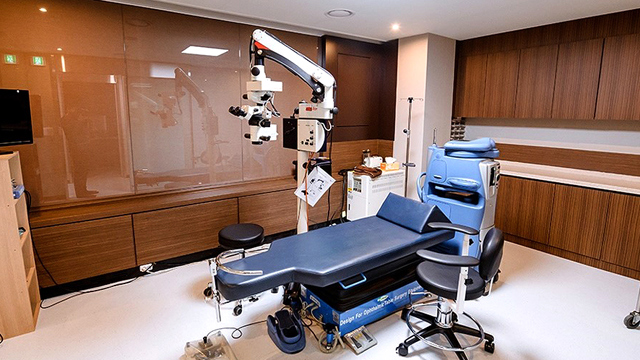
To find out which presbyopia category applies to you and whether the Clareon PanOptix Pro trifocal lens is a good fit, contact Jamsil Samsung Eye Clinic in Songpa-gu, Seoul, through its online consultation and contact page or by phone at +82-2-424-7523 to schedule a comprehensive eye examination.
Disclaimer
This page is for general informational purposes and does not constitute individualized medical advice. Surgical candidacy, technique, and expected outcomes can only be determined through a consultation with a qualified physician.
Sources & Further Reading
Other Services
Explore additional ophthalmology treatments offered by our specialists.

EVO AQUA ICL (Implantable Collamer Lens)
EVO AQUA ICL is a vision-correction procedure in which a specialized corrective lens made of biocompatible Collamer material is inserted directly between the natural lens and the iris, without damaging or reshaping the cornea.
Learn More
Presbyopia Surgery (Clareon PanOptix Pro)
Presbyopia surgery with the Clareon PanOptix Pro trifocal lens corrects presbyopia — the age-related loss of near-focusing ability caused by the eye's lens stiffening and losing elasticity, combined with reduced ciliary-muscle function — by implanting a
Learn More
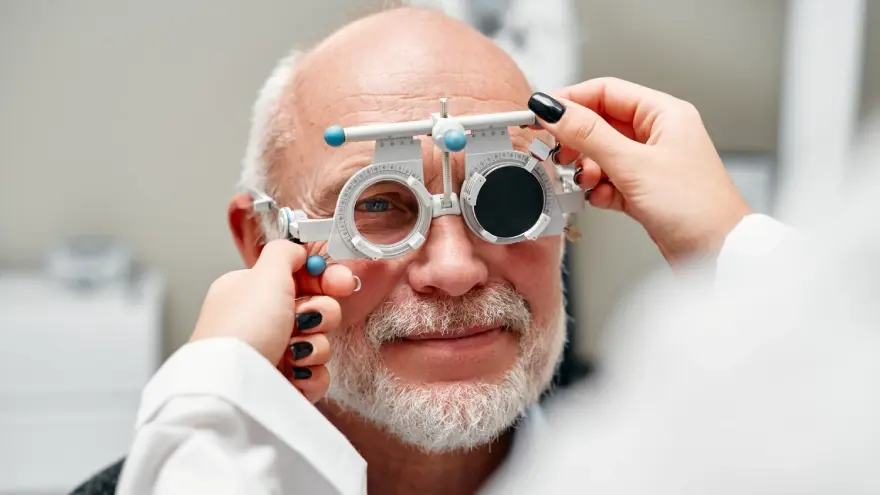
Presbyopia Precision Exam Program
The Presbyopia Precision Exam Program is a specialized diagnostic evaluation designed to thoroughly measure eye health, corneal state, and refractive index before prescribing presbyopia correction or laser vision procedures.
Learn More