Specialized Ophthalmology in Seoul · Dedicated International Patient Concierge
MOHW Registered · Foreign Patient Care
en-US


Presbyopia Care · Needs Clinic Confirmation
Presbyopia/Cataract Lens Implantation
For the many cataract patients — typically in their 40s, 50s, and older — who also have presbyopia, a standard single-vision (monofocal) intraocular lens restores distance vision but leaves presbyopia uncorrected, still requiring reading glasses.
Schedule a ConsultationPresbyopia/Cataract Lens Implantation

Medically reviewed by Dr. Cha Deok Sun, Director, Ophthalmologist (Ph.D.), board-certified, Korean Ophthalmological Society
For the many cataract patients — typically in their 40s, 50s, and older — who also have presbyopia, a standard single-vision (monofocal) intraocular lens restores distance vision but leaves presbyopia uncorrected, still requiring reading glasses. A multifocal lens instead corrects distance, intermediate, and near vision together, treating cataract and presbyopia in one surgery. At Jamsil Samsung Eye Clinic in Songpa-gu, Seoul, the specific lens category recommended depends on which of four clinic-defined presbyopia types a patient falls into.
What Is Presbyopia/Cataract Lens Implantation?
This individualized, category-based approach to lens selection distinguishes it from a one-size-fits-all recommendation.
This procedure selects and implants an intraocular lens matched to a patient's specific presbyopia category, alongside cataract removal.
The clinic categorizes presbyopia into four types with different surgical suitability and satisfaction: hyperopic, emmetropic, moderate-to-high myopic, and mild myopic presbyopia.
The procedure follows the same general lens-implant steps as cataract surgery — the natural or clouded lens is removed and a multifocal IOL is implanted — with the specific lens brand and type selected based on presbyopia category and lifestyle.
International patients may seek this treatment when cataract-related vision changes occur together with age-related difficulty focusing at near distances.
Multifocal intraocular lens implantation is the clinic's described approach for addressing cataract and presbyopia together, restoring distance, intermediate, and near vision together and reducing dependence on reading glasses.
Standard monofocal IOL cataract surgery remains the lower-cost, simpler alternative for patients who are not good candidates for, or do not want, a multifocal lens.
Who Performs This Procedure at Jamsil Samsung Eye Clinic

His familiarity with both the surgical and lens-selection sides of this decision allows him to walk patients through the reasoning behind a specific recommendation, rather than presenting a single lens option without context.
Dr. Cha Deok Sun, a director at Jamsil Samsung Eye Clinic, is a board-certified ophthalmologist with a Ph.D. in medicine whose core specializations are presbyopia surgery, cataract surgery, and vision-correction surgery. He completed his ophthalmology residency at Korea University Hospital and a cornea and cataract fellowship at Seoul National University, and holds a 2018 patent for an intraocular lens used in cataract and presbyopia surgery — directly relevant experience for this lens-selection-focused procedure. He is a full member of the Korean Ophthalmological Society, the Korean Society of Cataract and Refractive Surgery, the American Society of Cataract and Refractive Surgery (ASCRS), and the European Society of Cataract and Refractive Surgeons (ESCRS).
Understanding the Four Presbyopia Categories
| Category | Description | Surgical Suitability |
|---|---|---|
| Hyperopic presbyopia | Poor near AND far vision without glasses; symptoms appear earlier in life | Typically highest satisfaction with multifocal lens surgery |
| Emmetropic presbyopia | Good distance vision but worsening near vision from the mid-40s | Surgery considered once symptoms have progressed enough to warrant it |
| Moderate-to-high myopic presbyopia | Lifelong glasses-wearers now also needing reading glasses | Full eye exam recommended to rule out other conditions before surgery |
| Mild myopic presbyopia | Usable near vision without glasses, moderate uncorrected distance vision | Thorough discussion with doctor advised — removing distance glasses may itself relieve some symptoms |
This categorization is central to how the clinic approaches lens selection: rather than treating every presbyopia-with-cataract patient the same way, the specific category a patient falls into shapes both whether a multifocal lens is recommended and how much satisfaction they are likely to experience with it.
Who Is a Good Candidate for This Procedure
Cataract patients who also have presbyopia and want both conditions addressed through lens selection in a single surgery.
Patients whose presbyopia category — particularly hyperopic presbyopia — is associated with higher satisfaction rates for multifocal lens surgery.
Patients with only mild myopic presbyopia are specifically advised to discuss thoroughly with their doctor first, since their near-vision symptoms may partly resolve simply by not wearing distance glasses, without necessarily needing a multifocal lens.
Moderate-to-high myopic presbyopia patients are recommended to have a full eye exam to rule out other conditions before proceeding with surgery.
What to Expect: Procedure, Recovery, and Results Timeline
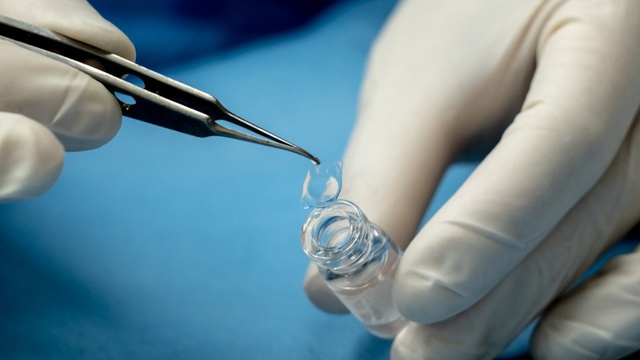
The procedure follows the same general lens-implant sequence as standard cataract surgery: the natural or clouded lens is removed, and a multifocal intraocular lens is implanted, with the specific lens brand and type selected based on the patient's presbyopia category and lifestyle. Cataract and lens-implantation surgery of this kind is generally performed using topical or local anesthesia, with the exact protocol confirmed during the surgical plan. General cataract/lens-implant postoperative protocol applies afterward, with recovery and adaptation to the new lens varying by patient and lens type.
Before surgery, patients should disclose all current medications to the medical team; blood thinners or prostate medications are typically paused about a week before surgery on the treating physician's instruction. Contact lens wearers stop soft lenses about seven days beforehand and toric soft or hard (RGP) lenses about fourteen days beforehand. Two prescribed pre-operative eye drops are generally instilled four times daily starting about three days before surgery, and patients are advised against alcohol or overexertion, particularly the night before surgery.
After surgery, normal activity is generally possible almost immediately, with usable vision typically restored from the next day once the protective eye shield is removed. A sleep eye-shield is generally worn nightly for about four weeks, and patients are advised to avoid sleeping face-down during this period. Prescribed eye drops are typically used up to six times daily for at least one month. Water should be kept off the face for about a week, with showering and hair-washing generally possible after three days and sauna use after about four weeks; alcohol is generally reintroduced after two weeks, light exercise after two weeks, vigorous exercise after about eight weeks, and daytime driving from around two weeks depending on individual adaptation to the new lens.
International Patient Considerations
International patients pursuing this procedure should expect that their specific presbyopia category — determined only through an in-person eye examination — will meaningfully shape both the lens recommendation and the expected outcome, so it is worth building some flexibility into travel plans rather than assuming a multifocal lens is guaranteed before that evaluation takes place. Patients whose examination places them in the moderate-to-high myopic or mild myopic categories should be prepared for a more involved conversation about whether a multifocal lens is actually the right choice, rather than a straightforward recommendation. As with other cataract and presbyopia procedures at the clinic, patients should plan to remain in Korea through at least the initial post-operative check the day after surgery, and should discuss with the clinic in advance how the multi-week eye-drop and activity-restriction schedule, along with any multifocal-lens neuroadaptation period, will be managed once they return home.
Safety, Precision, and Clinic Standards
Multifocal intraocular lens implantation carries the general risk profile of cataract surgery and IOL implantation: potential risks include infection, inflammation, retinal complications, increased eye pressure, and visual disturbances such as glare or halos. Because satisfaction with a multifocal lens varies meaningfully by presbyopia category, the clinic's four-category framework functions as a safety and expectation-setting tool as much as a clinical classification — it is specifically intended to avoid recommending a multifocal lens to patients whose presbyopia type predicts lower satisfaction, rather than offering the same lens category to every cataract-with-presbyopia patient by default.
Combining This Procedure with Other Treatments
Multifocal intraocular lens implantation is itself the clinic's described method for addressing cataract and presbyopia together; no additional combination procedures beyond this lens-selection approach are specifically documented.
Patients are encouraged to approach the presbyopia-category discussion as diagnostic information intended to guide a personalized decision, not as a verdict on whether they are somehow a "good" or "bad" candidate as a person — even patients in categories associated with lower expected satisfaction can still choose a multifocal lens after a thorough discussion of the tradeoffs, or opt for a standard monofocal lens instead, depending on their own priorities.
The Bottom Line
This procedure selects and implants an intraocular lens matched to one of four clinic-defined presbyopia categories, alongside cataract removal.
Hyperopic presbyopia patients typically show the highest satisfaction with multifocal lens surgery among the four categories.
Patients with mild myopic presbyopia should discuss thoroughly with their doctor first, since some near-vision symptoms may resolve without a multifocal lens.
Dr. Cha Deok Sun's intraocular lens patent and core specialization in cataract and presbyopia surgery support this lens-selection-focused procedure.
Not every cataract-with-presbyopia patient is an ideal multifocal lens candidate; the specific presbyopia category matters more than the diagnosis alone.
Frequently Asked Questions
What are the four presbyopia categories the clinic uses? The clinic categorizes presbyopia into hyperopic (poor near and far vision, symptoms appear earlier), emmetropic (good distance vision, worsening near vision from the mid-40s), moderate-to-high myopic (lifelong glasses-wearers now needing reading glasses too), and mild myopic (usable near vision without glasses) — each with different surgical suitability for multifocal lens surgery.
Which presbyopia category has the best results with multifocal lens surgery? Hyperopic presbyopia patients typically show the highest satisfaction with multifocal lens surgery among the four categories the clinic uses, though your specific candidacy still depends on a full eye examination.
I only have mild presbyopia symptoms — should I still get a multifocal lens? Not necessarily — patients with mild myopic presbyopia are specifically advised to discuss this thoroughly with their doctor first, since simply not wearing distance glasses may itself relieve some near-vision symptoms without needing a multifocal lens.
Why does the clinic recommend a full eye exam before surgery for moderate-to-high myopic presbyopia patients? This category is specifically recommended a full eye exam to rule out other eye conditions before proceeding with multifocal lens surgery, since long-term glasses-wearers developing presbyopia have a different set of considerations than other presbyopia categories.
What happens if I turn out not to be a good candidate for a multifocal lens? A standard monofocal intraocular lens remains the lower-cost, simpler alternative, correcting distance vision while still requiring reading glasses for near tasks; your surgeon will discuss this option if a multifocal lens is not recommended for your specific presbyopia category.
Can my presbyopia category change over time, or is it fixed? Your specific category reflects your current combination of near and distance vision, refractive history, and glasses dependence, so it is assessed fresh at the time of your evaluation rather than being a permanent label; a patient's presenting symptoms and prior refractive history are what place them into one of the four categories at that point in time.
Book a Consultation at Jamsil Samsung Eye Clinic
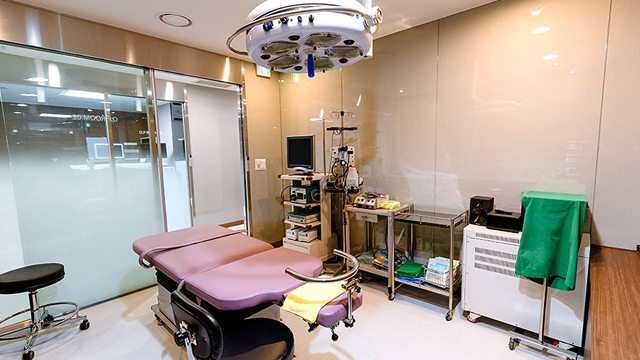
To find out which of the four presbyopia categories applies to you and which lens option may be best for your eyes, contact Jamsil Samsung Eye Clinic in Songpa-gu, Seoul, through its online consultation and contact page or by phone at +82-2-424-7523 to schedule a comprehensive eye examination.
Disclaimer
This page is for general informational purposes and does not constitute individualized medical advice. Surgical candidacy, technique, and expected outcomes can only be determined through a consultation with a qualified physician.
Sources & Further Reading
Other Services
Explore additional ophthalmology treatments offered by our specialists.

EVO AQUA ICL (Implantable Collamer Lens)
EVO AQUA ICL is a vision-correction procedure in which a specialized corrective lens made of biocompatible Collamer material is inserted directly between the natural lens and the iris, without damaging or reshaping the cornea.
Learn More

Presbyopia Surgery (Clareon PanOptix Pro)
Presbyopia surgery with the Clareon PanOptix Pro trifocal lens corrects presbyopia — the age-related loss of near-focusing ability caused by the eye's lens stiffening and losing elasticity, combined with reduced ciliary-muscle function — by implanting a
Learn More
Presbyopia Precision Exam Program
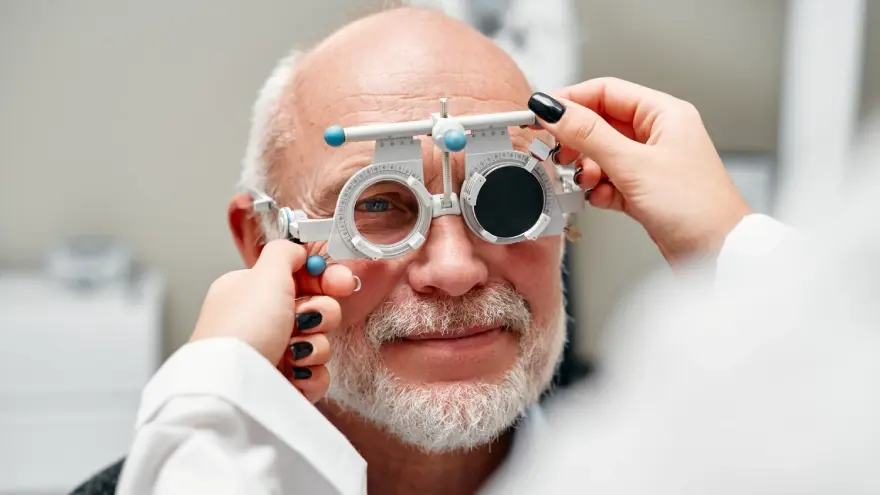
The Presbyopia Precision Exam Program is a specialized diagnostic evaluation designed to thoroughly measure eye health, corneal state, and refractive index before prescribing presbyopia correction or laser vision procedures.
Learn More