Specialized Ophthalmology in Seoul · Dedicated International Patient Concierge
MOHW Registered · Foreign Patient Care
en-US


Cataract Care · Needs Clinic Confirmation
Cataract Revision Surgery
Cataract revision surgery addresses problems that can arise after a previous cataract surgery — an intraocular lens (IOL) that has shifted or fully dislocated, a residual refractive error, or other complications — through lens repositioning, lens exchange, or
Schedule a ConsultationCataract Revision Surgery

Medically reviewed by Dr. Cha Deok Sun, Director, Ophthalmologist (Ph.D.), board-certified, Korean Ophthalmological Society
Cataract revision surgery addresses problems that can arise after a previous cataract surgery — an intraocular lens (IOL) that has shifted or fully dislocated, a residual refractive error, or other complications — through lens repositioning, lens exchange, or additional procedures. At Jamsil Samsung Eye Clinic in Songpa-gu, Seoul, this is a more complex, individualized category of surgery that requires detailed evaluation of the lens position and the underlying cause before deciding on the appropriate approach.
What Is Cataract Revision Surgery?
Cataract revision surgery, sometimes called cataract re-operation, is not a repeat of the original cataract procedure but a targeted response to a specific problem that has developed since.
If the IOL is partially displaced, it can generally be repositioned using scleral fixation, a technique that anchors the lens to the wall of the eye.
If the IOL is completely dislocated, it is generally removed and a new intraocular lens is implanted.
If a residual refractive error is present after the original surgery, IOL replacement or LASIK may be recommended depending on the patient's condition.
The clinic's surgical team specializes in cataract re-operation with advanced fixation techniques, offering personalized treatment for these more complex, individualized cases.
International patients seek cataract revision surgery in Korea specifically for specialized management of complex post-cataract complications and experienced surgical technique.
Who Performs Cataract Revision Surgery at Jamsil Samsung Eye Clinic
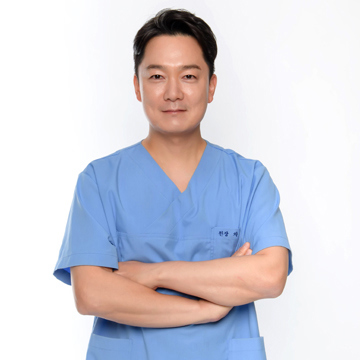
Dr. Cha Deok Sun, a director at Jamsil Samsung Eye Clinic, is a board-certified ophthalmologist with a Ph.D. in medicine whose core specializations are presbyopia surgery, cataract surgery, and vision-correction surgery. He completed his ophthalmology residency at Korea University Hospital and a cornea and cataract fellowship at Seoul National University, and holds a 2018 patent for an intraocular lens used in cataract surgery — directly relevant experience for a procedure centered on IOL positioning and replacement. He is a full member of the Korean Ophthalmological Society, the Korean Society of Cataract and Refractive Surgery, the American Society of Cataract and Refractive Surgery (ASCRS), and the European Society of Cataract and Refractive Surgeons (ESCRS).
Who Is a Good Candidate for Cataract Revision Surgery
Symptoms that might prompt an evaluation for revision surgery include a sudden change in vision quality after a period of stable, clear vision following the original cataract procedure, a new sensation of something shifting inside the eye, or a return of blurriness that differs in character from posterior capsule opacification.
Patients with a confirmed post-surgical problem such as IOL dislocation, malposition, or residual refractive error after a previous cataract surgery.
Patients experiencing reduced or changed vision after cataract surgery who have not yet had the cause definitively identified.
Not suitable, or requiring treatment first, for patients with active eye infections, uncontrolled eye inflammation, or medical conditions that make surgery unsafe.
Suitability and the specific approach — repositioning, exchange, or LASIK for residual error — depend on a comprehensive evaluation of the lens position, degree of displacement, and refractive measurement.
What to Expect: Procedure, Recovery, and Results Timeline
Evaluation follows a defined sequence: a comprehensive eye examination identifies the cause of blurred vision; the intraocular lens position is assessed; and the degree of lens displacement, if any, is measured alongside refractive error. If the lens is partially displaced, it is repositioned using scleral fixation; if it is completely dislocated, it is removed and a new intraocular lens is implanted; and if residual refractive error is the issue rather than lens position, IOL replacement or LASIK may be recommended based on the patient's condition. The procedure is typically performed under local anesthesia using anesthetic eye drops, with sedation if necessary, and patients generally experience little or no pain during surgery. Revision surgery generally takes about thirty to ninety minutes, depending on the complexity of the case, notably longer and more variable than the fifteen-to-thirty-minute range typical of an original, uncomplicated cataract surgery.
Initial recovery usually occurs within several days, while complete healing and vision stabilization generally take about four to eight weeks, depending on the complexity of the revision performed. Many patients notice improved vision within several days, with vision continuing to stabilize over the following weeks; a properly repositioned or replaced intraocular lens is designed to provide long-term vision correction. Before surgery, patients undergo a comprehensive eye examination, biometric measurements, and a review of the previous cataract surgery's records, since planning depends on understanding exactly what happened with the original lens; patients should also follow the surgeon's instructions regarding medications and fasting if required. Aftercare includes using prescribed eye drops, avoiding rubbing the eye, protecting the eye from injury, attending scheduled follow-up visits, and avoiding strenuous activity until cleared by the surgeon.
Aftercare after cataract revision surgery generally follows the clinic's broader post-cataract framework, adapted to the more involved nature of the procedure: a protective eye shield is worn on the day of surgery and typically removed the following day, with a sleep eye-shield generally worn nightly for about four weeks afterward and patients advised to avoid sleeping face-down during this period. Prescribed eye drops are typically used multiple times daily for at least a month, and direct water on the face is generally avoided for about a week, with sauna use possible after about four weeks. Alcohol is generally reintroduced after about two weeks, light exercise such as walking after about two weeks, and vigorous exercise such as swimming after about eight weeks; daytime driving is generally possible from around two weeks depending on adaptation, though these timelines can be extended for revision cases depending on the complexity of the surgery performed and the surgeon's individualized guidance.
Safety, Precision, and Clinic Standards
Cataract revision surgery uses advanced intraocular lens repositioning and replacement techniques, including scleral fixation for partially displaced lenses and full lens exchange for completely dislocated ones, with the specific surgical approach determined according to the patient's eye condition and surgical assessment. Recognized risks include infection, inflammation, bleeding, increased eye pressure, retinal detachment, corneal swelling, recurrent IOL dislocation, or the need for additional surgery; because these are inherently more complex cases than a first-time cataract procedure, the preoperative work-up specifically includes review of the previous surgery's records and biometric remeasurement, rather than treating a revision case the same way as a routine first surgery.
International Patient Considerations
International patients should typically allow about five to ten days in Korea for cataract revision surgery and its follow-up, reflecting both the more variable thirty-to-ninety-minute procedure time and the four-to-eight-week stabilization window that follows. Because the specific surgical approach — repositioning, exchange, or LASIK for residual error — cannot be determined until the clinic reviews the patient's previous surgical records and completes a new comprehensive examination, patients traveling for revision surgery should expect at least one evaluation visit before a treatment plan and precise timeline can be finalized, rather than assuming a single-visit resolution. Bringing any available documentation of the original cataract surgery — operative notes, the IOL model implanted, and any prior imaging — can meaningfully shorten this evaluation process.
How Cataract Revision Differs From the Original Surgery
| Aspect | Original Cataract Surgery | Cataract Revision Surgery |
|---|---|---|
| Typical duration | About 15–30 minutes per eye | About 30–90 minutes, depending on complexity |
| Recovery to stabilization | About 4–6 weeks | About 4–8 weeks |
| Planning basis | Standard pre-operative biometry | Review of prior surgery records plus new measurements |
Revision surgery is inherently more variable than a first-time cataract procedure, since the surgical plan depends on understanding exactly what went wrong with the original lens placement or refractive outcome, rather than following a standard, well-established sequence of steps.
Combining Cataract Revision Surgery with Other Treatments

Cataract revision surgery may be combined with LASIK to correct residual myopia, hyperopia, or astigmatism left after the original cataract procedure, depending on the patient's eye condition and the cause of their reduced vision.
It is worth emphasizing that needing cataract revision surgery does not necessarily reflect anything unusual about the original procedure — IOL dislocation and residual refractive error are recognized, if uncommon, outcomes that can occur after any cataract surgery regardless of where or by whom it was performed, and the availability of a dedicated revision service reflects the clinic's capacity to manage this category of case competently rather than a sign that such complications are frequent.
The Bottom Line
Cataract revision surgery addresses IOL dislocation, malposition, or residual refractive error after a previous cataract surgery, not a repeat of the original procedure.
The specific approach — scleral fixation, lens exchange, or LASIK — depends on the cause identified during a comprehensive evaluation.
Recovery is generally longer and more variable than after an original cataract procedure, taking about four to eight weeks to stabilize.
Dr. Cha Deok Sun's 2018 intraocular lens patent and core specialization in cataract surgery are directly relevant to this lens-positioning-focused procedure.
International patients should plan for about five to ten days in Korea to allow for evaluation, surgery, and follow-up.
Frequently Asked Questions
What happens if my intraocular lens shifts after cataract surgery? This is addressed through cataract revision surgery, in which the ophthalmologist evaluates the lens position and either repositions a partially displaced lens using scleral fixation or removes and replaces a fully dislocated lens, depending on the examination findings.
How is cataract revision surgery different from the original cataract surgery? Revision surgery targets a specific problem — lens displacement, dislocation, or residual refractive error — rather than following the standard steps of an original procedure, and it generally takes longer (about 30–90 minutes versus 15–30 minutes) and requires review of the prior surgery's records as part of planning.
How long does recovery take after cataract revision surgery? Initial recovery usually occurs within several days, with complete healing and vision stabilization generally taking about four to eight weeks, depending on the complexity of the specific revision performed.
Can residual blurriness after cataract surgery be fixed without another lens surgery? Sometimes — if the cause is a residual refractive error rather than a lens position problem, LASIK may be recommended instead of IOL replacement, depending on the patient's eye condition and the surgeon's assessment.
How much time should I plan for cataract revision surgery if I'm traveling from abroad? International patients should typically allow about five to ten days in Korea for surgery and follow-up, though an evaluation visit is generally needed first to determine the specific approach before a precise timeline can be confirmed.
Does needing revision surgery mean my original cataract surgery was done incorrectly? Not necessarily — IOL dislocation and residual refractive error are recognized, uncommon outcomes that can occur after any cataract surgery regardless of technique or surgeon, and revision surgery exists specifically to address these situations competently rather than to correct a presumed error.
Book a Consultation at Jamsil Samsung Eye Clinic
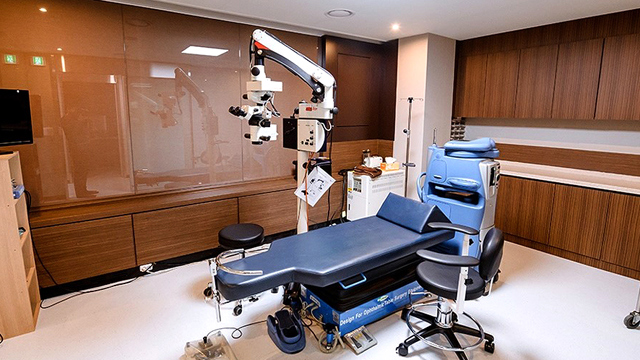
To discuss cataract revision surgery options with Dr. Cha Deok Sun, contact Jamsil Samsung Eye Clinic in Songpa-gu, Seoul, through its online consultation and contact page or by phone at +82-2-424-7523 to arrange an evaluation.
Disclaimer
This page is for general informational purposes and does not constitute individualized medical advice. Surgical candidacy, technique, and expected outcomes can only be determined through a consultation with a qualified physician.
Sources & Further Reading
Other Services
Explore additional ophthalmology treatments offered by our specialists.
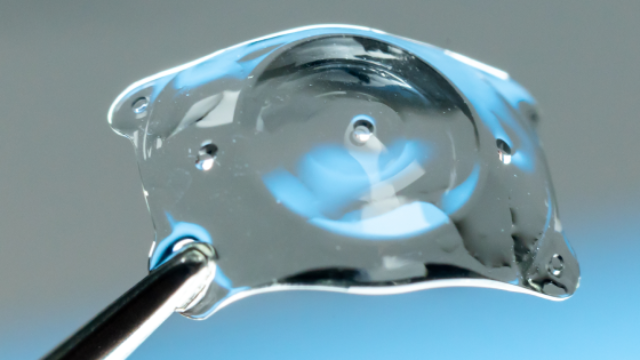
EVO AQUA ICL (Implantable Collamer Lens)
EVO AQUA ICL is a vision-correction procedure in which a specialized corrective lens made of biocompatible Collamer material is inserted directly between the natural lens and the iris, without damaging or reshaping the cornea.
Learn More

Presbyopia Surgery (Clareon PanOptix Pro)
Presbyopia surgery with the Clareon PanOptix Pro trifocal lens corrects presbyopia — the age-related loss of near-focusing ability caused by the eye's lens stiffening and losing elasticity, combined with reduced ciliary-muscle function — by implanting a
Learn More
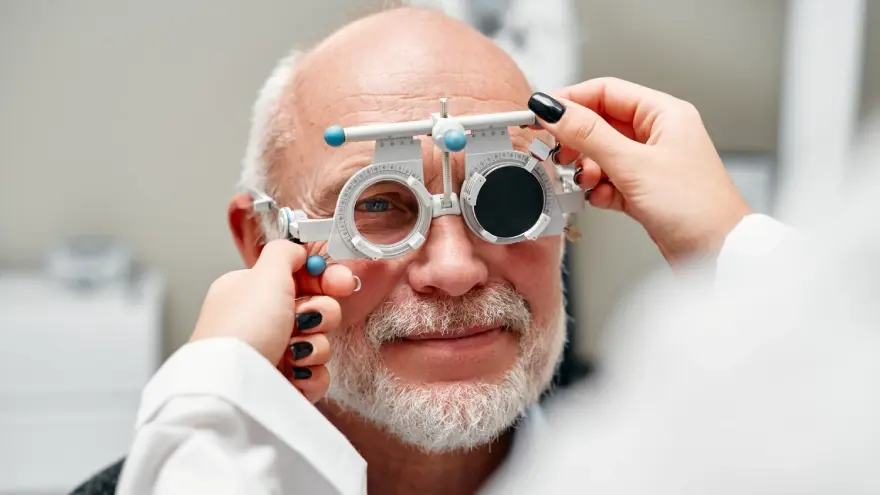
Presbyopia Precision Exam Program
The Presbyopia Precision Exam Program is a specialized diagnostic evaluation designed to thoroughly measure eye health, corneal state, and refractive index before prescribing presbyopia correction or laser vision procedures.
Learn More