Specialized Ophthalmology in Seoul · Dedicated International Patient Concierge
MOHW Registered · Foreign Patient Care
en-US


Cataract Care · Needs Clinic Confirmation
Pre/Post-Surgery Care(Cataract & Presbyopia Surgery)
Pre/Post-Surgery Care covers the preparation required before, and the structured recovery support provided after, cataract and presbyopia lens-implant surgery at Jamsil Samsung Eye Clinic in Songpa-gu, Seoul.
Schedule a ConsultationPre/Post-Surgery Care (Cataract & Presbyopia Surgery)

Medically reviewed by Dr. Cha Deok Sun, Director, Ophthalmologist (Ph.D.), board-certified, Korean Ophthalmological Society
Pre/Post-Surgery Care covers the preparation required before, and the structured recovery support provided after, cataract and presbyopia lens-implant surgery at Jamsil Samsung Eye Clinic in Songpa-gu, Seoul. This framework applies across the clinic's lens-based procedures, including standard cataract surgery, cataract revision, and combined cataract-presbyopia lens implantation.
What Is Pre/Post-Surgery Care for Cataract & Presbyopia Surgery?
Because lens-implant surgery is intended to provide long-term correction rather than a temporary fix, the surrounding care protocol is oriented toward giving that implanted lens the best possible conditions to settle into a stable, well-tolerated position during the weeks following surgery.
Pre/Post-Surgery Care is the preparation and recovery framework surrounding lens-implant surgery, not a treatment in its own right.
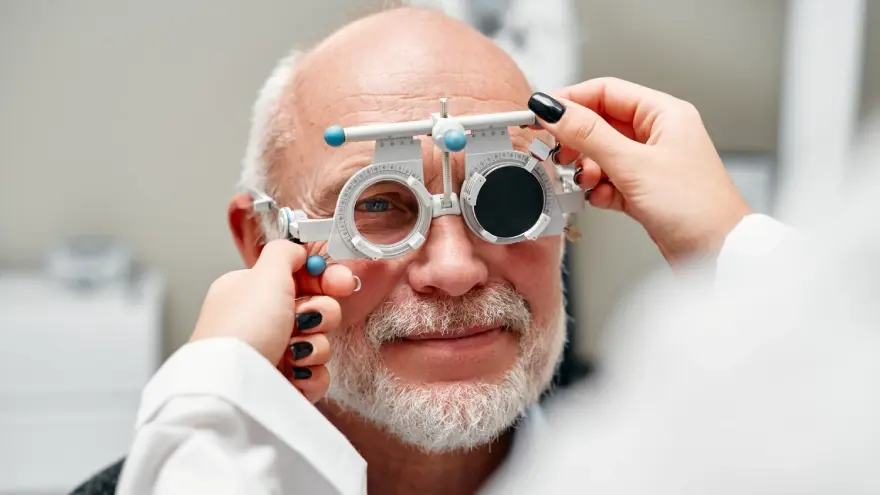
Preoperative care includes a comprehensive eye examination, eye measurements, medical history review, and discussion of the appropriate treatment approach.
Postoperative care includes prescribed protective eye shields, medicated eye drops to prevent infection and inflammation, and mandatory follow-up exams.
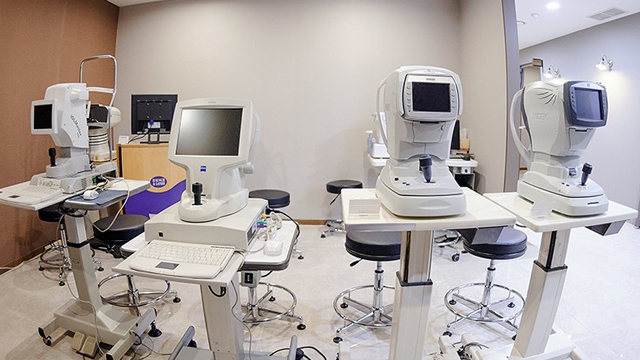
Modern pre- and post-operative evaluations use diagnostic tools including optical coherence tomography (OCT) scanners, automated keratometers, ultrasonic biometers, and high-magnification slit-lamp biomicroscopes.
Perioperative care is individualized, with medicated eye drop schedules and clinical assessments tailored to the specific type of intraocular lens implanted.
Proper pre- and post-operative care supports healing, helps reduce complications, and helps optimize the visual outcome.
Who Oversees Pre/Post-Surgery Care at Jamsil Samsung Eye Clinic

Dr. Cha Deok Sun, a director at Jamsil Samsung Eye Clinic, is a board-certified ophthalmologist with a Ph.D. in medicine whose core specializations are presbyopia surgery, cataract surgery, and vision-correction surgery. He completed his ophthalmology residency at Korea University Hospital and a cornea and cataract fellowship at Seoul National University, and holds a 2018 patent for an intraocular lens used in cataract surgery. He is a full member of the Korean Ophthalmological Society, the Korean Society of Cataract and Refractive Surgery, the American Society of Cataract and Refractive Surgery (ASCRS), and the European Society of Cataract and Refractive Surgeons (ESCRS).
Who Needs Pre/Post-Surgery Care Guidance
Even patients who feel fully prepared for their surgery date benefit from reviewing the recovery timeline in advance, since certain steps — arranging transportation, stopping specific medications on the surgeon's instruction, and planning several weeks of activity modifications — need to be organized before surgery day rather than figured out afterward.
Every patient scheduled for cataract or presbyopia lens-implant surgery who has completed the required ophthalmic evaluation and been medically cleared for surgery.
Patients with an untreated eye infection or other condition that makes surgery unsafe, who may need to postpone treatment until medically cleared.
International patients in particular benefit from understanding the full timeline in advance, since aftercare extends for weeks after the surgical day itself.
What to Expect: Preparation Before Surgery

Preparation begins with a comprehensive eye examination to assess the eye condition and determine the appropriate surgical approach, along with eye measurements (biometry) used to select the intraocular lens. Patients may be instructed to use prescribed eye drops in the days before surgery, arrange transportation for after surgery since driving is not possible the same day, and follow medication instructions provided by the surgical team, including guidance on any blood thinners or other medications that may need to be adjusted beforehand. Cataract surgery is generally performed with local or topical anesthesia, so the patient is awake but the eye is numbed throughout the procedure.
What to Expect: Recovery After Surgery
Patients can generally walk and resume most quiet daily activities, such as using the bathroom or watching television, immediately after surgery. A protective eye shield is worn on the day of surgery; it is removed and vision becomes usable from the next day. Some tearing or a foreign-body sensation may occur on the day of surgery, and rest is advised. A sleep eye-shield is generally worn nightly for about four weeks, with patients advised to avoid sleeping face-down during this period. Two prescribed eye drops are generally used about six times daily for at least a month, starting the day after surgery, and artificial tears with regular screen breaks are advised during early phone and computer use. All follow-up exams should be kept.
Additional activity guidance follows a defined timeline: no direct water on the face for about a week (showering and hair-washing are generally fine after about three days, sauna or jjimjilbang after about four weeks); external impact to, or rubbing of, the eye should be avoided throughout recovery; alcohol is generally reintroduced after about two weeks given the inflammation risk; light exercise such as walking is generally possible after about two weeks; and vigorous exercise such as swimming or basketball is generally deferred until about eight weeks. Daytime driving is generally possible from around two weeks, depending on individual adaptation to the new lens. Vision generally improves progressively after surgery, and the implanted intraocular lens is intended to provide long-term vision correction, although age-related eye conditions can still develop separately over time.
Why Structured Pre/Post-Surgery Care Matters
Outcomes after cataract or presbyopia lens surgery depend not only on the surgical technique itself but on how well the surrounding preparation and recovery are managed — accurate preoperative measurements are essential for selecting the correct lens power, and consistent adherence to postoperative eye-drop schedules and activity restrictions reduces the risk of infection, inflammation, and other complications during healing. Perioperative care at the clinic is designed around individualized management plans, including eye-drop schedules and clinical assessments tailored to the specific intraocular lens implanted, rather than a single generic protocol applied to every patient regardless of which lens or procedure they received.
Safety Considerations in Pre/Post-Surgery Care
Common temporary effects after cataract or presbyopia lens surgery can include blurred vision, mild discomfort, dry eye, and light sensitivity; serious complications are uncommon but possible, which is why mandatory follow-up exams are built into the aftercare protocol rather than left optional. Following activity restrictions — particularly around water exposure, eye protection, and vigorous exercise — is intended to reduce the risk of infection or mechanical disruption to the eye and the newly implanted lens while the eye heals.
International Patient Considerations
International patients planning cataract or presbyopia surgery in Korea should build the full aftercare window into their travel schedule, not just the surgery date. At minimum, remaining through the first post-operative check the day after surgery is standard, and many patients also stay for a further follow-up visit in the days or weeks that follow, particularly if a multifocal lens was implanted and its position and effect need confirming. Because complete healing generally takes about four to six weeks — longer if cataract revision surgery or additional neuroadaptation is involved — patients should plan around this window before finalizing a return flight, and should discuss with the clinic in advance how longer-term items, such as the up-to-four-week nightly eye shield or the roughly eight-week wait before vigorous exercise, will be managed once they are back home, including whether any follow-up can be coordinated with a local eye care provider in the meantime.
How Preparation and Aftercare Can Vary
| Situation | Notable Consideration |
|---|---|
| Standard cataract surgery | Follows the general timeline described above |
| Multifocal IOL for presbyopia correction | Additional weeks-to-months neuroadaptation period beyond initial healing |
| Cataract revision surgery | Longer, more variable recovery (about 4–8 weeks) depending on complexity |
| Perioperative care combined with other conditions | Can be integrated with dry eye therapies or intraocular pressure management when relevant |
Because the exact lens type and procedure affect the specific timeline, patients should treat the general guidance above as a starting framework and confirm the precise schedule that applies to their particular surgery with their treating surgeon.
Patients sometimes underestimate how much the recovery period shapes their overall experience of lens-implant surgery, focusing preparation almost entirely on the day of the procedure itself; in practice, most of the total time commitment associated with cataract and presbyopia surgery — weeks of eye-drop use, staged returns to exercise and water exposure, and, for multifocal lenses, an extended neuroadaptation period — occurs after the surgical portion is already complete.
The Bottom Line
Pre/Post-Surgery Care is the structured preparation and recovery framework surrounding cataract and presbyopia lens-implant surgery, not a separate treatment.
Preparation includes a comprehensive eye examination, biometry measurements, and medication review before surgery.
Aftercare follows a defined multi-week timeline covering eye drops, activity restrictions, and mandatory follow-up visits.
Dr. Cha Deok Sun's cataract and cornea fellowship training, along with his intraocular lens patent, support his oversight of this perioperative process.
Specific guidance can vary by lens type and procedure, so exact instructions should always be confirmed with your treating surgeon.
Frequently Asked Questions
How long do I need to wear a protective eye-shield after cataract surgery? A protective eye shield is worn on the day of surgery and removed the next day when vision becomes usable, and a sleep eye-shield is generally worn nightly for about four weeks afterward to prevent inadvertent pressure on the eye while sleeping.
When can I resume exercise after cataract or presbyopia surgery? Light exercise such as walking is generally possible after about two weeks, while more vigorous activity such as swimming or basketball is generally deferred until about eight weeks, though your surgeon may adjust this based on your specific recovery.
How often do I need to use eye drops after surgery, and for how long? Two prescribed eye drops are generally used about six times daily for at least one month starting the day after surgery, with the exact regimen and duration determined by your surgeon based on the procedure performed.
Can I drive myself home after cataract or presbyopia surgery? No — patients should arrange transportation in advance since driving yourself home the day of surgery is not advised; daytime driving is generally possible from around two weeks depending on your adaptation to the new lens.
Does aftercare differ if I received a multifocal lens for presbyopia correction? Yes — beyond the standard cataract recovery timeline, multifocal lens patients generally experience an additional neuroadaptation period lasting weeks to months as their visual system adjusts to the new lens's multiple focal points.
What symptoms after surgery should prompt a call to the clinic rather than waiting for my next follow-up? Sudden worsening of pain, vision, or unexpected discharge should be reported promptly; expected temporary effects like mild discomfort, dry eye, blurred vision, or light sensitivity are generally addressed through your scheduled aftercare rather than requiring an urgent call.
Book a Consultation at Jamsil Samsung Eye Clinic
To learn more about the preparation and aftercare timeline for your specific cataract or presbyopia procedure, contact Jamsil Samsung Eye Clinic in Songpa-gu, Seoul, through its online consultation and contact page or by phone at +82-2-424-7523 to schedule your comprehensive eye examination.
Disclaimer
This page is for general informational purposes and does not constitute individualized medical advice. Preparation and aftercare instructions should always be confirmed directly with your treating physician, since they vary by procedure and individual healing.
Sources & Further Reading
Other Services
Explore additional ophthalmology treatments offered by our specialists.

EVO AQUA ICL (Implantable Collamer Lens)
EVO AQUA ICL is a vision-correction procedure in which a specialized corrective lens made of biocompatible Collamer material is inserted directly between the natural lens and the iris, without damaging or reshaping the cornea.
Learn More

Presbyopia Surgery (Clareon PanOptix Pro)
Presbyopia surgery with the Clareon PanOptix Pro trifocal lens corrects presbyopia — the age-related loss of near-focusing ability caused by the eye's lens stiffening and losing elasticity, combined with reduced ciliary-muscle function — by implanting a
Learn More
Presbyopia Precision Exam Program
The Presbyopia Precision Exam Program is a specialized diagnostic evaluation designed to thoroughly measure eye health, corneal state, and refractive index before prescribing presbyopia correction or laser vision procedures.
Learn More