Specialized Ophthalmology in Seoul · Dedicated International Patient Concierge
MOHW Registered · Foreign Patient Care
en-CA


Specialty Overview
Vision Correction Surgery
Vision correction surgery at Jamsil Samsung Eye Clinic in Seoul: Clear Smile LASIK, Z8 Premium LASIK, LASEK, and ICL, led by Dr. Kim Byoung Jin.
Schedule a ConsultationVision Correction Surgery

Medically reviewed by Dr. Kim Byoung Jin, Representative Director, Ophthalmologist (Ph.D.), certified by the Korean Ophthalmological Society
Vision correction surgery treats myopia, hyperopia, and astigmatism — including very high myopia — to reduce a patient's dependence on glasses or contact lenses. At Jamsil Samsung Eye Clinic in Songpa-gu, Seoul, this specialty covers Clear Smile LASIK, Z8 Premium LASIK, LASEK, corneal collagen cross-linking, and implantable contact lens (ICL) surgery, using a Ziemer Femto LDV Z8 femtosecond laser and a Zeiss Triple A MEL 90 excimer laser.
What Is Vision Correction Surgery?
Vision correction surgery reshapes the cornea, or places a corrective lens inside the eye, so that light focuses properly on the retina without the need for glasses or contact lenses.
Treats myopia (nearsightedness), hyperopia (farsightedness), and astigmatism, including high myopia.
Includes laser-based methods (Clear Smile LASIK, Z8 Premium LASIK, LASEK) and lens-based methods (ICL, T-ICL) for patients not suited to laser correction.
Optional corneal collagen cross-linking (CXL) can be added to help reduce corneal haze and myopic regression.
Eligibility depends on corneal thickness, refractive stability, and overall eye health, confirmed through a comprehensive eye examination.
The clinic's SMART program applies individualised procedure selection, Mitomycin use where indicated, accelerated recovery, and coordinated total care across all vision-correction procedures.
Who Performs Vision Correction Surgery at Jamsil Samsung Eye Clinic
 |  |  |
| Dr. Kim Byoung Jin, Ph.D. Ophthalmologist, certified by the Korean Ophthalmological Society | Dr. Cha Deok Sun, Ph.D. Ophthalmologist, certified by the Korean Ophthalmological Society | Dr. Choi Ah Young Ophthalmologist |
Dr. Kim Byoung Jin, Ph.D. — Ophthalmologist certified by the Korean Ophthalmological Society; former clinical fellow at Samsung Seoul Hospital and adjunct professor at Sungkyunkwan and Hallym university medical schools, with a practice centred on vision correction and epiphora (tear duct) surgery.
Dr. Cha Deok Sun, Ph.D. — Ophthalmologist certified by the Korean Ophthalmological Society; cornea and cataract fellowship-trained at Seoul National University and holder of an intraocular lens patent (2018), focusing on vision correction, presbyopia and cataract surgery, and ICL.
Dr. Choi Ah Young — Ophthalmologist; cornea/cataract clinical fellow at Ajou University with additional training at Stony Brook University Hospital in New York, focusing on vision correction, presbyopia and cataract surgery, and Dream Lens (orthokeratology).
Vision Correction Options Available
| Method | How It Works | Best Suited For |
|---|---|---|
| Clear Smile LASIK | Femtosecond laser creates a small lenticule removed through a roughly 2 mm incision — no large corneal flap | Patients wanting rapid recovery and minimal incision |
| Z8 Premium LASIK | Swiss Femto Z8 laser with real-time OCT guidance and a custom docking interface | Patients seeking precise, low-energy correction, including high myopia or astigmatism |
| LASEK / High Premium LASEK | Removes the corneal epithelium, then applies excimer laser correction under a protective lens | Patients with thinner corneas or those avoiding a corneal flap |
| Corneal Collagen Cross-Linking (CXL) | Riboflavin plus UVA light strengthens the corneal stroma | Added to LASEK for patients where corneal stability is a particular priority |
| EVO AQUA ICL / T-ICL | A corrective lens is implanted inside the eye without removing corneal tissue | Patients with very high myopia, astigmatism, or corneas too thin for laser correction |
Clear Smile LASIK uses the Ziemer Femto LDV Z8 femtosecond laser to create a small lenticule inside the cornea, which is then removed through an incision of roughly 2 mm, reshaping the cornea to correct myopia and astigmatism without creating a large corneal flap. Because the incision is small and no flap is lifted, the clinic markets it as gentle on the cornea with a comparatively quick and comfortable recovery, and it is often positioned toward patients who want rapid vision recovery, have difficulty taking extended leave, or are concerned about post-surgery dry eye.
Z8 Premium LASIK is described by the clinic as a customised procedure built around detailed corneal and wavefront analysis, using the same Femto Z8 laser platform together with real-time OCT imaging and a custom eye-docking interface intended to prevent eye movement during treatment. The clinic states this low-energy, high-precision approach is intended to reduce thermal and inflammatory side effects, support sharper visual outcomes, and shorten recovery time relative to older, higher-energy laser techniques.
LASEK and High Premium LASEK remove the regenerable corneal epithelium before applying excimer laser correction, then place a protective contact lens over the cornea while the epithelium regenerates. Because no corneal flap is created, LASEK-based procedures are generally considered for patients with relatively thin corneas or those specifically wanting to avoid flap-related risks, at the cost of a longer initial healing phase than incision-based laser methods.
Corneal Collagen Cross-Linking (CXL) combines LASEK-based vision correction with a riboflavin (vitamin B2) solution and UVA light exposure, which cross-links and strengthens the corneal stroma. The clinic offers this in combination with High Premium LASEK, particularly for patients with high myopia, as a way to help reduce corneal haze and myopic regression after surgery.
EVO AQUA ICL and T-ICL (Toric ICL) implant a biocompatible, Collamer-material lens inside the eye through a small incision of about 3.0 mm, without removing any corneal tissue. The lens includes a central micro-hole that allows natural aqueous humour flow, which the clinic states removes the need for a separate peripheral iridotomy before implantation. Because no corneal tissue is removed, ICL and T-ICL are generally positioned for patients with very high myopia, significant astigmatism, or corneas too thin to be good candidates for any laser-based method.
Who Is a Good Candidate for Vision Correction Surgery
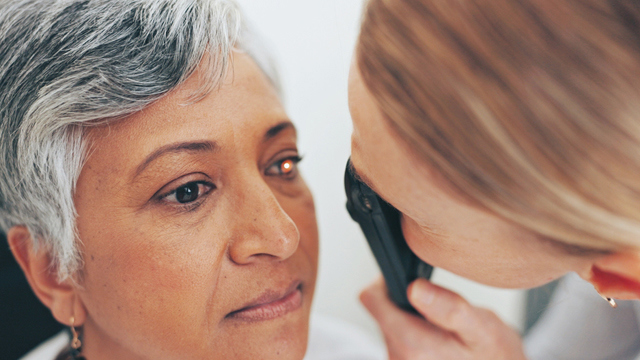
Generally aged 18 or older, with stable vision for approximately six months.
Adequate corneal thickness and healthy eyes, confirmed through a comprehensive eye examination lasting approximately two hours.
No unstable prescription, uncontrolled systemic health conditions, or active ocular infection.
Final eligibility for a specific method (laser-based or lens-based) is determined individually, since suitability depends on corneal thickness, shape, and refractive stability.
Patients who are pregnant or nursing, or who have advanced keratoconus, are generally not suitable candidates.
What to Expect: Procedure, Recovery, and Results Timeline
Before surgery, patients undergo corneal topography, pupil-size measurement, and an assessment of overall eye health to confirm candidacy and select the most suitable method. Laser vision correction is generally performed using topical anaesthetic eye drops. For Z8 Premium LASIK, the femtosecond laser creates a small lenticule that is extracted through a roughly 2 mm incision, and most patients return to light daily activities within three to four days. For Clear Smile LASIK, rapid visual recovery is emphasised, though an exact day-by-day schedule varies by individual. For LASEK-based procedures, a protective contact lens is placed while the corneal epithelium regenerates, and recovery generally progresses over several days to weeks, with visual stability continuing to develop over the following months. Vision generally improves over days to weeks and stabilises over weeks to months, depending on the method chosen. Patients are advised to stop wearing contact lenses before their examination (soft lenses for about a week, hard or toric lenses for about two weeks, and orthokeratology lenses for about three weeks), avoid driving themselves on exam or surgery day because of pupil dilation, and follow the clinic's aftercare protocol, including artificial tears, protective eyewear, and scheduled follow-up visits.
Preparation and aftercare are structured around a defined timeline rather than left to the patient to guess at:
| Timing | Instruction |
|---|---|
| Before the exam | Stop soft contact lenses 7 days beforehand, toric soft or hard (RGP) lenses 14 days beforehand, and orthokeratology (Dream Lens) 1 month beforehand, so corneal topography reflects your natural corneal shape. |
| Day of surgery | No self-driving, since pupils are dilated for the exam — arrange public transport or a companion; avoid alcohol, heavy exertion, and eye or face makeup. |
| First week | Wear a protective sleep eye-shield nightly; use artificial tears; avoid rubbing the eyes; take regular breaks from phones and screens. |
| First 1–4 weeks | Light exercise from about 1 week, vigorous exercise from about 4 weeks; skin makeup from about 1 week, eye makeup from about 2 weeks; no direct water on the face for 1 week, and no sauna or jjimjilbang for about 4 weeks. |
International Patient Considerations
Patients travelling from abroad for vision correction surgery are typically weighing candidacy, choice of method, recovery time, and how many days to plan for in Korea before returning home. Because eligibility depends on individual corneal thickness, shape, and refractive stability, the clinic's evaluation — including corneal topography and roughly a two-hour comprehensive eye examination — determines both candidacy and which method is realistic, rather than a patient self-selecting a procedure in advance. Given that most laser-based procedures allow a return to light activity within days, but full visual stabilisation can take weeks to months, international patients should plan their travel dates, and any required follow-up before departing Korea, around the specific method recommended at consultation rather than around the shortest possible stay.
Safety, Precision, and Clinic Standards
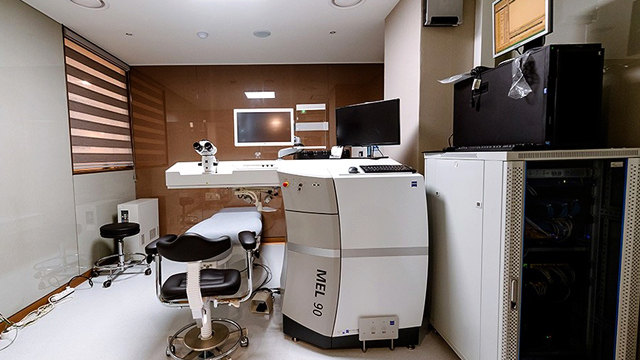
The clinic's SMART program applies individualised procedure selection based on each patient's eye condition. Mitomycin is used in select LASEK-based procedures to help reduce corneal haze and myopia recurrence. Diagnostic planning uses corneal topography and pupil-size measurement to guide method selection. The Z8 Premium LASIK procedure uses real-time OCT imaging to monitor the corneal stroma during treatment. A custom eye-docking interface is used to prevent eye displacement during laser delivery. The clinic states that its low-energy laser delivery is intended to reduce thermal and inflammatory side effects compared with higher-energy approaches. Recognised risks of vision correction surgery include dry eye, glare or halos, under- or over-correction, and, rarely, more serious complications, which is why the American Academy of Ophthalmology and Health Canada both recommend a thorough candidacy examination before proceeding, including confirmation that a patient does not have severe dry eye or another underlying condition that would make surgery unsuitable.
Combining Vision Correction with Other Treatments
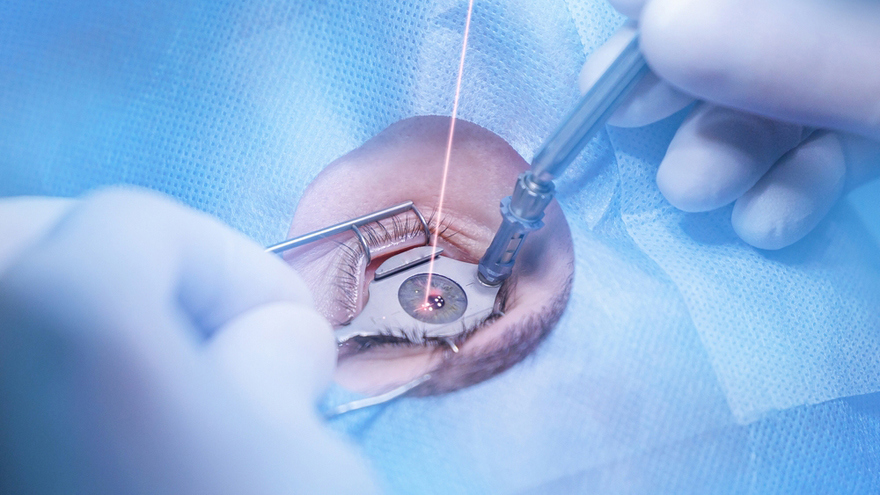
High Premium LASEK is documented as commonly combined with corneal collagen cross-linking (CXL) for patients with high myopia, to help support long-term corneal stability.
Z8 Premium LASIK can be combined with corneal collagen cross-linking for thin corneas or high myopia, along with customised toric/astigmatism laser alignment.
Patients not suited to any laser-based method may be evaluated instead for EVO AQUA ICL or T-ICL implantation.
The Bottom Line
Vision correction surgery at Jamsil Samsung Eye Clinic covers both laser-based methods (Clear Smile LASIK, Z8 Premium LASIK, LASEK) and lens-based methods (ICL, T-ICL) under one evaluation.
The clinic's SMART program applies individualised procedure selection, selective Mitomycin use, accelerated recovery, and coordinated pre- and post-operative care.
Dr. Kim Byoung Jin, whose primary specialisation is refractive surgery, is a member of ASCRS, ESCRS, and the AAO, and personally manages his patients' pre- and post-operative care.
Final candidacy for any specific method depends on an individual eye examination — no single procedure is right for every patient.
Results are not guaranteed; dry eye, glare, and under- or over-correction are recognised risks of any vision-correction procedure.
Frequently Asked Questions
How do I know which vision-correction method is right for me?
Suitability depends on your corneal thickness, corneal shape, refractive error, and overall eye health, which is why the clinic requires a comprehensive eye examination — including corneal topography and pupil measurement — before recommending a specific method such as Clear Smile LASIK, Z8 Premium LASIK, LASEK, or ICL.
What is the difference between LASIK-type procedures and LASEK?
LASIK-type procedures, including Clear Smile LASIK and Z8 Premium LASIK, work inside the corneal stroma through a small incision without removing the surface epithelium, while LASEK removes the regenerable corneal epithelium before applying the excimer laser, which can make it an option for some patients with thinner corneas.
How long does recovery take after vision correction surgery?
Recovery varies by method: patients undergoing Z8 Premium LASIK generally return to light daily activities within three to four days, while LASEK-based procedures involve a protective contact lens during epithelial healing and a recovery period that typically progresses over several days to weeks.
Who should consider ICL instead of laser vision correction?
Patients with very high myopia, significant astigmatism, or corneas too thin for laser-based correction may be better candidates for EVO AQUA ICL or T-ICL, which places a corrective lens inside the eye without removing corneal tissue.
What are the main risks of vision correction surgery?
Recognised risks include dry eye, glare or halos, under- or over-correction, and, less commonly, more serious complications — which is why a detailed pre-operative examination and an individualised choice of method are central to the clinic's approach.
Does the clinic offer corneal-strengthening treatment?
Yes. Corneal collagen cross-linking (CXL) can be combined with LASEK-based procedures, particularly High Premium LASEK, to help support corneal stability in patients where this is a specific priority.
Can both eyes be treated in the same visit?
Most vision-correction procedures at the clinic are planned to treat both eyes during a single visit once candidacy is confirmed, though the exact surgical schedule depends on the method chosen and the findings of your pre-operative examination.
Will I still need glasses after vision correction surgery?
Vision correction surgery aims to substantially reduce dependence on glasses or contact lenses, but it does not prevent the natural onset of presbyopia later in life, and some patients may still need glasses for specific tasks such as night driving or fine near work, depending on the method and their individual outcome.
Book a Consultation at Jamsil Samsung Eye Clinic
To find out which vision-correction option may be suitable for you, contact Jamsil Samsung Eye Clinic in Songpa-gu, Seoul, through its online consultation and contact page or by phone at +82-2-424-7523.
Disclaimer
This page is for general informational purposes and does not constitute individualised medical advice. Surgical candidacy, technique, and expected outcomes can only be determined through a consultation with a qualified physician.
Related Services
Ophthalmology procedures available across our clinical departments.
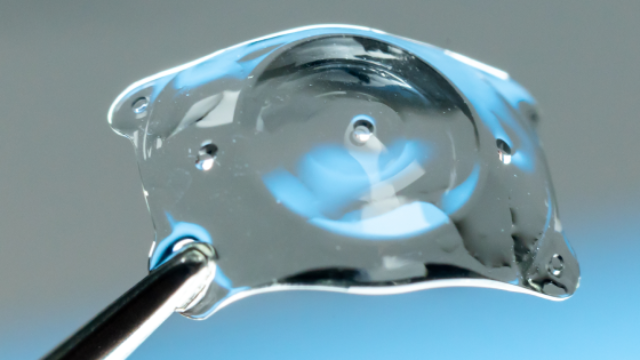
EVO AQUA ICL (Implantable Collamer Lens)
EVO AQUA ICL is a vision-correction procedure in which a specialized corrective lens made of biocompatible Collamer material is inserted directly between the natural lens and the iris, without damaging or reshaping the cornea.
Learn More

Presbyopia Surgery (Clareon PanOptix Pro)
Presbyopia surgery with the Clareon PanOptix Pro trifocal lens corrects presbyopia — the age-related loss of near-focusing ability caused by the eye's lens stiffening and losing elasticity, combined with reduced ciliary muscle function — by implanting a
Learn More
Presbyopia Precision Examination Program
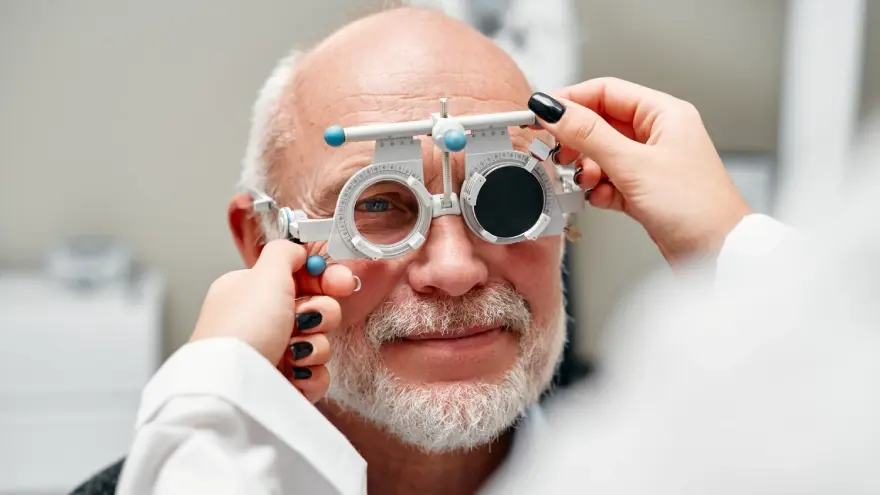
The Presbyopia Precision Examination Program is a specialized diagnostic evaluation designed to thoroughly assess eye health, corneal condition, and refractive index before prescribing presbyopia correction or laser vision procedures.
Learn More