Specialized Ophthalmology in Seoul · Dedicated International Patient Concierge
MOHW Registered · Foreign Patient Care
en-CA

Specialty Overview
Dry Eye & Tear Duct Treatment
Dry eye and tear duct treatment at Jamsil Samsung Eye Clinic in Seoul: IPL therapy for meibomian gland dysfunction and epiphora care with Dr. Kim Byoung Jin.
Schedule a ConsultationDry Eye & Tear Duct Treatment
Medically reviewed by Dr. Kim Byoung Jin, Representative Director, Ophthalmologist (Ph.D.), certified by the Korean Ophthalmological Society
Dry eye and tear duct treatment addresses two related but distinct problems: inadequate or unstable tears causing dry-eye discomfort, and excessive or poorly drained tears causing epiphora (watery eyes). At Jamsil Samsung Eye Clinic in Songpa-gu, Seoul, treatment ranges from IPL (Intense Pulsed Light) therapy for evaporative dry eye to tear-duct dilation, silicone intubation, or surgical drainage-pathway creation for tear-duct obstruction.
What Is Dry Eye & Tear Duct Treatment?
Dry eye and excessive tearing can look similar day to day — both involve eye discomfort and blurred vision — but they generally have different underlying causes and require different treatment.
Dry eye, particularly evaporative dry eye linked to meibomian gland dysfunction (MGD), can be treated with IPL therapy, lubricating drops, warm compresses, punctal plugs, or medicated drops depending on cause and severity.
Epiphora (excessive tearing) can result from narrowing or blockage of the tear drainage pathway, excessive tear production, or eyelid-related drainage problems.
Tear-duct obstruction is treated according to its severity: tear-point enlargement for a narrowed opening, dilation with silicone tube placement for partial blockage, or creation of a new drainage pathway between the lacrimal sac and nasal mucosa for complete blockage.
Both conditions require an evaluation to identify the actual underlying cause before treatment, since treating dry eye and treating tear-drainage obstruction call for different approaches.
Who Performs Dry Eye & Tear Duct Treatment at Jamsil Samsung Eye Clinic

Dr. Kim Byoung Jin, Ph.D.
Certified Ophthalmologist
Dr. Kim Byoung Jin, Representative Director and a certified ophthalmologist (Ph.D.) at Jamsil Samsung Eye Clinic, lists epiphora and lacrimal drainage disorders, and dry eye and blepharitis treatment including IPL, among his core clinical specialisations. He completed a fellowship at Samsung Seoul Hospital and postdoctoral research at Columbia University Hospital, and has held visiting-professor appointments at Seirei Hamamatsu Hospital and Columbia University Hospital. His documented subspecialty experience includes lacrimal and epiphora diagnosis and treatment, IPL treatment for dry eye and meibomian gland inflammation, and LipiFlow, and his academic publications include work on epiphora and punctal-plug complications. He is a full member of the Korean Optometric Society and Contact Lens Research Group, ASCRS, ESCRS, and the American Academy of Ophthalmology (AAO), and holds academic appointments at Sungkyunkwan University and Hallym University Schools of Medicine.
Dry Eye & Tear Duct Services Available
| Service | What It Addresses |
|---|---|
| Dry Eye Syndrome (IPL Treatment) | Evaporative dry eye linked to meibomian gland dysfunction |
| Epiphora (Excessive Tearing) | Excessive tear production or inadequate tear drainage |
Dry Eye Syndrome (IPL Treatment) uses Intense Pulsed Light therapy, a Health Canada–recognised approach for managing dry eye associated with meibomian gland dysfunction. Structured light pulses are applied across the cheekbones and periocular skin to warm the meibomian glands, soften hardened lipids, and reduce abnormal blood vessels that drive chronic ocular surface inflammation, improving the tear-film lipid layer and reducing tear evaporation. The clinic also offers other personalised dry-eye options depending on cause and severity, including medicated drops (such as Diquas, Restasis, or cyclosporine-type drops), eyelid hygiene and warm compresses, punctal plug occlusion, and autologous serum eye drops or amniotic membrane contact lenses.
Epiphora (Excessive Tearing) treatment depends on the underlying mechanism. Tear-drainage obstruction is treated via micro-probing, balloon dacryoplasty, silicone intubation, or surgical bypass (dacryocystorhinostomy, creating a new pathway between the lacrimal sac and nasal mucosa), while reflex tearing from hypersecretion or eyelid laxity is managed with topical anti-inflammatory drops, eyelid position correction, or botulinum toxin injections into the lacrimal gland.
The clinic's approach to both conditions emphasises matching treatment intensity to disease severity rather than defaulting to the most invasive option available: mild dry eye may be managed with lubricating drops and eyelid hygiene alone, while more persistent evaporative dry eye linked to meibomian gland dysfunction may be escalated to IPL; similarly, mild tear-duct narrowing may respond to tear-point enlargement alone, while complete obstruction requires surgical bypass.
Who Is a Good Candidate for Dry Eye & Tear Duct Treatment
Patients with dry eye associated with meibomian gland dysfunction that has not adequately responded to routine care, confirmed as appropriate for IPL through an eye examination.
Patients with persistent excessive tearing caused by a treatable problem such as tear-duct obstruction, canalicular narrowing, or eyelid-related drainage problems.
Patients whose dry eye or tearing symptoms have not been explained or resolved through standard eye care and warrant a dedicated ocular-surface and lacrimal evaluation.
Not suitable, or requiring treatment of the underlying issue first, for patients with an active eye infection, untreated ocular-surface disease, or inflammation causing the symptoms, and for IPL specifically, patients with certain skin or ocular conditions that require an alternative approach.
What to Expect: Procedure, Recovery, and Results Timeline
For IPL, the process generally follows four steps: an eye-condition diagnosis, imaging of the tear-secretion structures, application of the M22 laser system across the periocular area, and eyelid-margin squeezing to express meibomian gland secretions. IPL is a non-invasive procedure requiring no anaesthesia; a cooling gel is applied to the periocular skin to manage heat sensation during the session, and normal activity can generally resume immediately afterward. Improvement can occur after treatment, but the evidence indicates that benefits can be temporary and vary between patients, so follow-up and ongoing dry-eye management may still be needed since IPL does not necessarily eliminate the underlying condition permanently.
For epiphora, minor in-office diagnostic procedures such as probing or irrigation are performed under topical numbing eye drops and take about fifteen to thirty minutes, with immediate resumption of daily activities afterward. More involved treatment — tear-duct dilation with silicone tube placement for partial obstruction, or surgical bypass for complete obstruction — is generally performed under local anaesthesia with sedation or general anaesthesia and takes about one to two hours for outpatient surgical bypass. Initial tissue healing after surgical lacrimal procedures typically takes one to two weeks, with follow-up appointments scheduled at day one, week one, and periodically afterward, and final drainage-tube removal, where a tube was placed, scheduled several months later depending on clinical response.
Before either type of treatment, patients should provide a complete medical and eye history, including current medications and any previous eye procedures, and report any active eye infection or inflammation before proceeding. For lacrimal procedures specifically, preparation includes fluorescein dye testing and slit-lamp examination, and blood-thinning medications may need to be paused if cleared by the prescribing physician. Aftercare generally involves following prescribed eye-care instructions, avoiding rubbing or pressure on the treated eye, and attending scheduled follow-ups; patients with a silicone tube in place should follow specific tube-care instructions and report any displacement, persistent discharge, increasing pain, or worsening symptoms promptly.
International Patient Considerations
International patients evaluating dry eye or tear-duct treatment in Korea are often weighing how many visits their specific treatment path will require and how much follow-up they can realistically fit into a trip abroad. A single IPL session, or a minor in-office epiphora procedure such as probing or irrigation, can generally be completed within a single visit lasting well under an hour, making these options relatively straightforward to plan around a short trip. Surgical lacrimal procedures are a different consideration: since initial healing takes about one to two weeks with follow-up visits at day one and week one, and any silicone tube placed is typically not removed for several months, patients travelling specifically for tear-duct surgery should plan to remain in Korea through the early follow-up window and discuss with the clinic in advance how later tube-removal follow-up might be coordinated with a local eye care provider back home, or through a return visit.
Safety, Precision, and Clinic Standards
IPL treatment uses Health Canada–recognised prescription IPL technology specifically classified for managing dry eye associated with meibomian gland dysfunction, with appropriate eye protection required during every session. Possible IPL side effects include skin irritation or pigmentation changes and, rarely, ocular complications, which is why skin pigmentation and ocular condition are both assessed before selecting treatment parameters. Tear-duct procedures use punctal dilators, lacrimal probes, fine silicone intubation tubing, balloon catheters, high-definition nasal endoscopes, and micro-drills or radiofrequency/laser instruments depending on the procedure; recognised risks include temporary irritation, bleeding, infection, inflammation, tube displacement or blockage, scarring of the lacrimal pathway, and recurrence of tearing, which is why the clinic schedules structured follow-up rather than treating a single procedure as the end of care.
Because dry eye and epiphora can sometimes present with overlapping symptoms — for example, reflex tearing triggered by an irritated, dry ocular surface can look like a primary tear-drainage problem — the clinic's diagnostic process is specifically designed to separate these mechanisms before deciding on a treatment path, rather than assuming that visible watering always means excess tear production or a blocked duct.
Combining Dry Eye & Tear Duct Treatment with Other Care
Tear duct treatments can be combined with functional eyelid surgeries, sinus procedures, or routine dry-eye therapies such as punctal plug placement.
IPL may be combined with meibomian gland expression for patients with meibomian gland dysfunction, based on clinical assessment.
Epiphora management can be combined with functional eyelid surgeries, nasal endoscopic sinus procedures, or punctal plug adjustments when coexisting dry eye or eyelid malposition is present.
The Bottom Line
Dry eye and excessive tearing often feel similar but usually have different causes, so an accurate diagnosis matters before choosing a treatment.
IPL therapy is a Health Canada–recognised option for evaporative dry eye linked to meibomian gland dysfunction, though benefits can be temporary and ongoing management may still be needed.
Tear-duct obstruction is treated according to severity, from tear-point enlargement to silicone intubation to full surgical bypass.
Dr. Kim Byoung Jin's core specialisations explicitly include epiphora/lacrimal drainage disorders and IPL-based dry eye treatment, directly matching this specialty.
Results are not guaranteed for every patient, and some treatments, including IPL, may need to be repeated over time.
Frequently Asked Questions
What is IPL treatment for dry eye, and how does it work?
IPL (Intense Pulsed Light) therapy applies controlled light pulses around the eye area to warm the meibomian glands, soften hardened lipids, and reduce abnormal blood vessels associated with meibomian gland dysfunction, improving the tear-film lipid layer to reduce tear evaporation in appropriate candidates.
How long do the results of IPL treatment last?
Results vary by patient, and evidence indicates that benefits can be temporary, with some patients experiencing a gradual loss of effect over time; ongoing dry-eye management, and sometimes repeat sessions, may still be needed since IPL does not necessarily eliminate the underlying condition permanently.
What causes excessive tearing (epiphora), and how is it different from dry eye?
Epiphora is caused by either excessive tear production or inadequate tear drainage, often from narrowing or blockage of the tear duct, while dry eye involves inadequate or unstable tears; the two can produce similar day-to-day discomfort, which is why an evaluation is used to distinguish the actual cause before selecting treatment.
How is a blocked tear duct treated?
Treatment depends on severity: a narrowed tear-duct opening may be treated with tear-point enlargement, partial obstruction with dilation and silicone tube placement, and complete obstruction with surgical creation of a new drainage pathway between the lacrimal sac and nasal cavity.
Is IPL treatment painful, and is there any downtime?
IPL is a non-invasive procedure that does not require anaesthesia; a cooling gel is applied to manage any heat sensation during treatment, and most patients can resume normal activities immediately afterward, though temporary skin or ocular discomfort is possible depending on individual response.
Can dry eye and epiphora occur in the same patient at the same time?
Yes — some patients experience reflex overproduction of tears as a response to an irritated, dry ocular surface, which can look like excessive tearing even though the underlying problem is actually dry eye; this is one reason the clinic's evaluation aims to identify the true mechanism, rather than assuming visible tearing always means too much tear production or drainage failure.
Book a Consultation at Jamsil Samsung Eye Clinic
To discuss dry eye or tear-duct evaluation and treatment with Dr. Kim Byoung Jin, contact Jamsil Samsung Eye Clinic in Songpa-gu, Seoul, through its online consultation and contact page or by phone at +82-2-424-7523.
Disclaimer
This page is for general informational purposes and does not constitute individualised medical advice. Diagnosis, treatment selection, and expected outcomes can only be determined through a consultation with a qualified physician, and results are not guaranteed.
Related Services
Ophthalmology procedures available across our clinical departments.
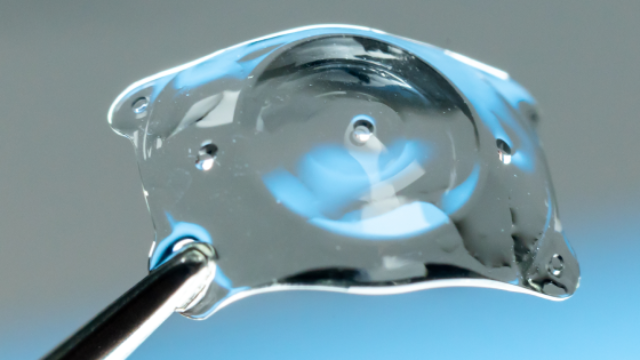
EVO AQUA ICL (Implantable Collamer Lens)
EVO AQUA ICL is a vision-correction procedure in which a specialized corrective lens made of biocompatible Collamer material is inserted directly between the natural lens and the iris, without damaging or reshaping the cornea.
Learn More

Presbyopia Surgery (Clareon PanOptix Pro)
Presbyopia surgery with the Clareon PanOptix Pro trifocal lens corrects presbyopia — the age-related loss of near-focusing ability caused by the eye's lens stiffening and losing elasticity, combined with reduced ciliary muscle function — by implanting a
Learn More
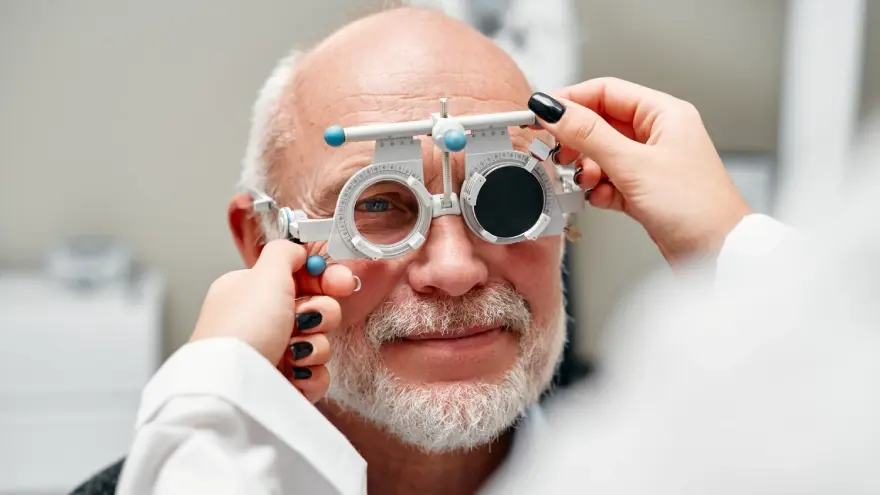
Presbyopia Precision Examination Program
The Presbyopia Precision Examination Program is a specialized diagnostic evaluation designed to thoroughly assess eye health, corneal condition, and refractive index before prescribing presbyopia correction or laser vision procedures.
Learn More