Specialized Ophthalmology in Seoul · Dedicated International Patient Concierge
MOHW Registered · Foreign Patient Care
en-CA

Implantable Lens Surgery · Needs Clinic Confirmation
T-ICL (Toric ICL)
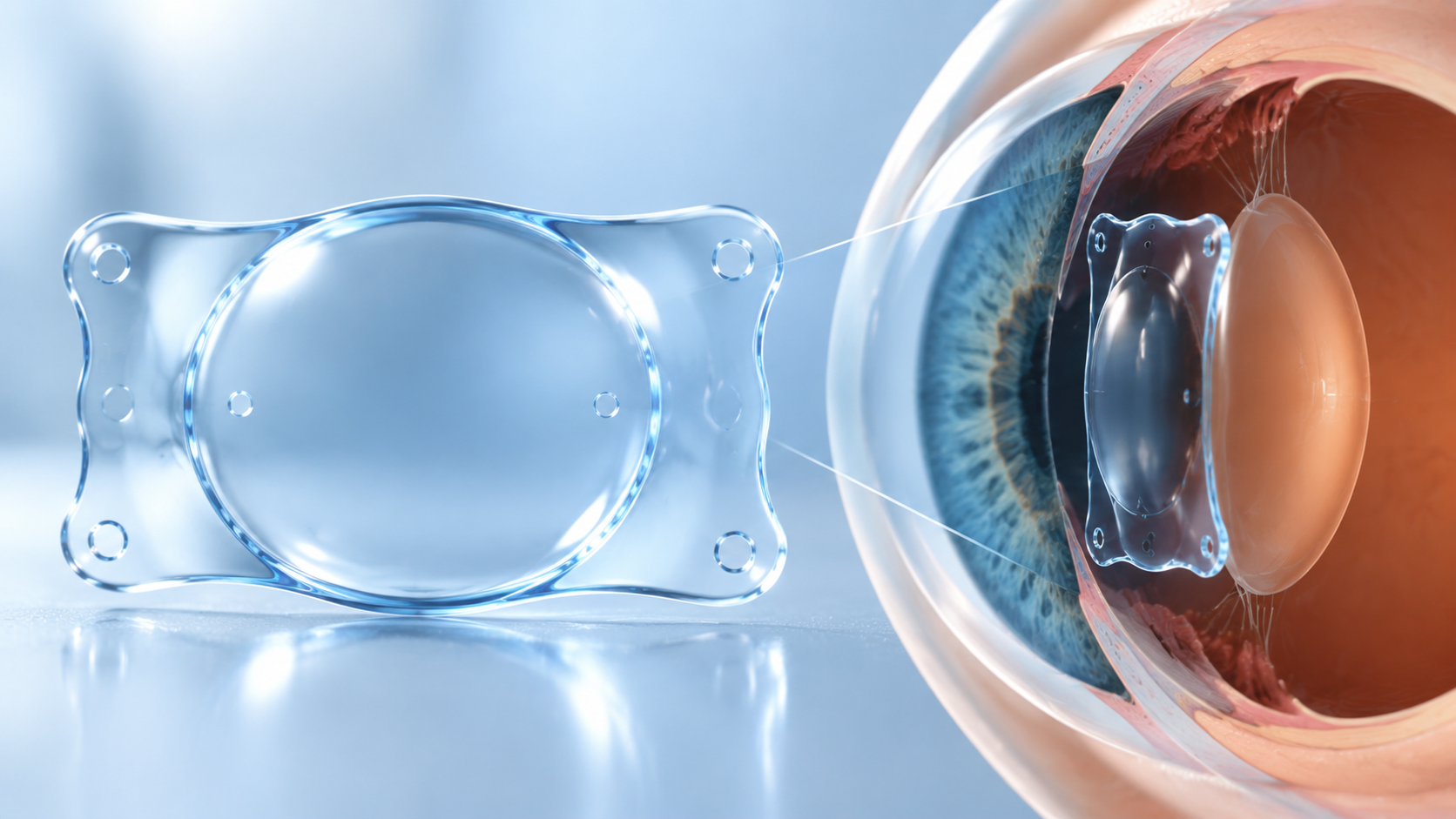
T-ICL is a toric phakic lens procedure that places a vision-correcting lens inside the eye, behind the iris and in front of the natural lens, to correct myopia combined with astigmatism.
Schedule a ConsultationT-ICL (Toric ICL)
Medically reviewed by Dr. Cha Deok Sun, ophthalmologist & Ph.D. at Jamsil Samsung Eye Clinic, Seoul, specialises in cataract, presbyopia & ICL surgery.
T-ICL is a toric phakic lens procedure that places a vision-correcting lens inside the eye, behind the iris and in front of the natural lens, to correct myopia combined with astigmatism. At Jamsil Samsung Eye Clinic in Songpa-gu, Seoul, this implantable lens option leaves the cornea structurally intact, making it an alternative for patients whose combination of myopia and astigmatism, or whose corneal profile, makes them less suited to corneal laser correction.
What Is T-ICL (Toric ICL)?
T-ICL corrects myopia with astigmatism using an implanted toric lens rather than reshaping the cornea.
The toric lens is positioned behind the iris and in front of the natural lens, and is aligned specifically to correct the astigmatism component of the patient's refractive error.
Because no corneal tissue is removed or reshaped, the cornea remains structurally intact, unlike LASIK, LASEK, or other laser-based procedures.
Case-study data referenced by the clinic documents T-ICL used for patients with combined high myopia and meaningful astigmatism — for example, myopia around -6.25D with astigmatism in the -2.75D to -4.25D range.
In the United States, the FDA-approved EVO/EVO+ Visian Toric ICL indication covers qualifying patients aged 21–45 with specified myopic astigmatism ranges and adequate anterior chamber depth.
The lens does not replace the eye's natural lens; it is added alongside it, and can provide improved distance vision when appropriately selected and positioned.
Who Performs T-ICL at Jamsil Samsung Eye Clinic

Dr. Cha Deok Sun, an ophthalmologist at Jamsil Samsung Eye Clinic, specialises in vision correction surgery, presbyopia and cataract surgery, and Implantable Collamer Lens (ICL) procedures. He holds a Ph.D. in Medicine and has extensive clinical experience in corneal, cataract, and refractive surgery.
Dr. Cha completed his residency training in the Department of Ophthalmology at Korea University Hospital and further advanced his expertise through a clinical fellowship in Cornea and Cataract at Seoul National University. His professional background includes serving as Former Head Physician (1st Department) at Pyeongtaek Kim's Eye Clinic and as a Dedicated Surgeon at Cheonho ELC Eye Clinic.
He has been recognised internationally for his research contributions, including receiving 2nd Place in Poster Presentation at the European Society of Cataract and Refractive Surgeons (ESCRS) in 2016 and obtaining a patent related to intraocular lens technology used in cataract surgery in 2018.
Dr. Cha is an active member of leading ophthalmology organisations, including the Korean Ophthalmological Society, Korean Society of Cataract and Refractive Surgery (KSCRS), American Society of Cataract and Refractive Surgery (ASCRS), and European Society of Cataract and Refractive Surgeons (ESCRS). His research and academic work have contributed to advancements in cataract surgery techniques, intraocular lens technology, corneal protection, and refractive correction.
Who Is a Good Candidate for T-ICL
Patients whose astigmatism is a meaningful part of their overall refractive error, rather than a minor component, are the ones for whom the toric design specifically matters — a standard, non-toric ICL would leave that astigmatism uncorrected, which is why accurately measuring and aligning for astigmatism is a defining feature of this particular procedure rather than an optional add-on.
Patients with combined high myopia and meaningful astigmatism who may not be ideal candidates for corneal laser correction.
Patients with adequate anterior chamber depth and refractive stability, confirmed through comprehensive eye examination.
Not suitable, or requiring careful assessment, for patients with active eye disease, glaucoma, cataract, significant retinal disease, inadequate anterior chamber depth, or unstable refraction.
Suitability depends on detailed examination of eye anatomy — including anterior chamber depth, intraocular pressure, corneal health, and retinal status — rather than refractive error alone.
What to Expect: Procedure, Recovery, and Results Timeline
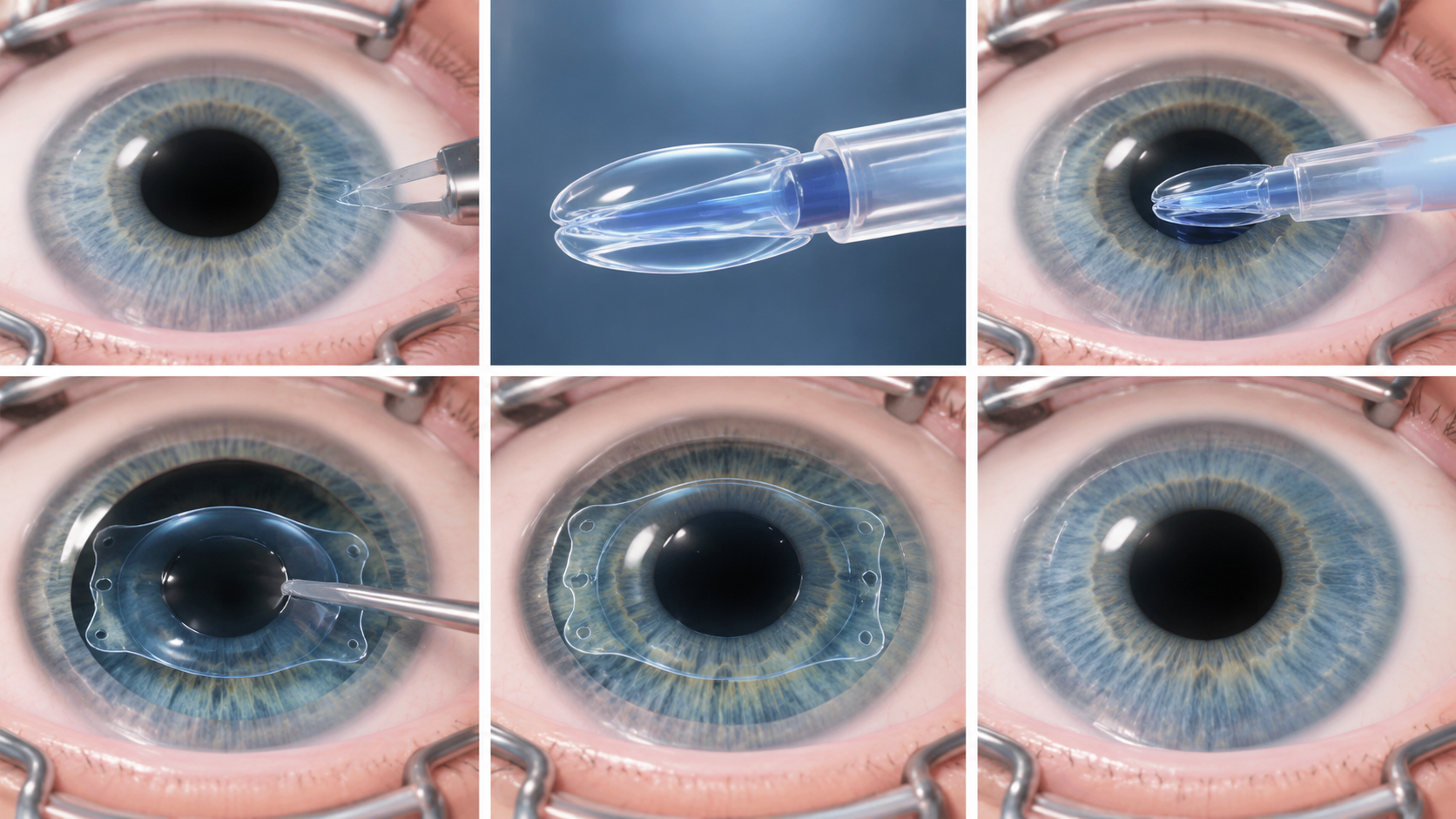
The procedure begins with eye preparation and a small opening made in the eye; the folded toric lens is then inserted, positioned behind the iris and in front of the natural lens, and aligned specifically to correct the astigmatism component of the patient's prescription. T-ICL implantation is typically performed using local or topical anaesthesia with medication to keep the eye comfortable, with the exact approach depending on the surgical plan. Vision can recover relatively quickly after implantation, though the eye still requires postoperative monitoring while healing and while the lens position is assessed, since accurate lens sizing and vault (the space between the lens and the eye's natural structures) are important parts of surgical planning that continue to matter after surgery.
Before surgery, a comprehensive eye examination confirms refractive stability and whether the eye's anatomy is suitable for implantation, with lens sizing and vault assessment forming a key part of surgical planning. After surgery, postoperative follow-up monitors visual acuity, intraocular pressure, lens position, inflammation, and corneal endothelial health; regular eye examinations are recommended on an ongoing basis for any patient with a phakic intraocular lens, not just in the immediate postoperative period. Vision improvement may occur quickly after implantation, and the implanted lens is intended to remain in the eye long-term, although removal or exchange may be required if complications or an unsuitable lens position occur.
Preparation for ICL-based procedures at the clinic, including T-ICL, follows a defined pre-operative protocol. Contact lens wearers stop soft lenses about seven days beforehand, astigmatism-correcting soft or hard lenses about fourteen days beforehand, and orthokeratology (Dream) lenses about a month beforehand, so that measurements reflect the eye's natural, undistorted shape. Patients continue routine blood pressure or diabetes medications as normal, but should consult their physician about pausing blood thinners, aspirin, warfarin, or prostate medications about a week before surgery, and should inform the medical team of all current prescriptions. Prescribed antibiotic or anti-inflammatory eye drops are generally applied four times daily starting about three days before the procedure. The day before surgery, patients are advised to rest well, avoid alcohol, and refrain from heavy exertion, and on the day of surgery, makeup, perfume, and hair products should be avoided (basic skin lotion is generally permitted); transportation should be arranged in advance since patients should not drive themselves due to pupil-dilating eye drops used during the visit.
International Patient Considerations
International patients considering T-ICL should account for the multi-step preoperative evaluation this procedure requires — a comprehensive assessment of anterior chamber depth, corneal health, intraocular pressure, and retinal status — before finalising travel plans, since a portion of prospective patients will not turn out to be anatomically suitable and may need to be redirected toward a different option after testing. Because prescribed pre-operative eye drops generally begin about three days before the procedure and contact lenses must be stopped one to four weeks in advance depending on lens type, this preparation window needs to be planned before arrival in Korea rather than compressed into a short trip. Patients should also plan to remain in the area through at least the immediate postoperative monitoring period, since intraocular pressure and lens position are checked at follow-up visits after surgery.
Safety, Precision, and Clinic Standards
T-ICL implantation requires detailed preoperative assessment of anterior chamber depth, intraocular pressure, corneal health, and retinal status, since the lens is positioned in a confined anatomical space between the iris and the natural lens. Recognised risks include increased eye pressure, inflammation, infection, cataract formation, endothelial cell loss, lens displacement or rotation, residual refractive error, and retinal complications; the clinic's ongoing follow-up schedule after implantation — checking visual acuity, intraocular pressure, lens position, and corneal endothelial health — is specifically designed to catch these issues early rather than only at the time of the original procedure.
How T-ICL Compares to Other Vision-Correction Options
| Option | Corneal Tissue Removed? | Best For |
|---|---|---|
| T-ICL (Toric ICL) | No | Myopia combined with meaningful astigmatism |
| LASIK / LASEK | Yes | Standard myopia or astigmatism within laser-suitable corneal profiles |
| EVO AQUA ICL | No | High myopia without significant astigmatism |
The clinic describes ICL, including its toric variant, as an option that corrects vision without removing corneal tissue, positioned specifically for very high myopia and thinner corneas where laser correction may not be appropriate. T-ICL specifically adds astigmatism correction to this category, distinguishing it from a standard (non-toric) ICL used for myopia alone.
Combining T-ICL with Other Treatments
Combination procedures specific to T-ICL are not confirmed in the clinic's documentation. Patients considering T-ICL alongside another eye condition, such as cataract or a retinal concern, should discuss their specific case individually during consultation, since T-ICL requires a phakic (natural-lens-intact) eye and would not be combined with cataract lens replacement in the same way as a pseudophakic procedure.
Patients weighing T-ICL against corneal laser correction for astigmatism should understand that the fundamental tradeoff is between removing/reshaping corneal tissue (laser options) versus adding a lens without touching the cornea (T-ICL) — neither approach is universally superior, and the deciding factor is usually whether a patient's cornea and refractive profile fall within the range that laser correction can safely address.
The Bottom Line
T-ICL corrects myopia combined with astigmatism using a toric implantable lens, without removing or reshaping corneal tissue.
It can be an option for patients with high myopia and meaningful astigmatism who are not ideal candidates for corneal laser correction.
Careful assessment of anterior chamber depth, intraocular pressure, and retinal status is central to candidacy and surgical planning.
Dr. Cha Deok Sun's core specialisation in refractive and vision-correction surgery, and his ASCRS/ESCRS/AAO membership, support this procedure.
The lens is intended to remain long-term but is not permanent tissue removal — it can be repositioned, exchanged, or removed if complications arise.
Frequently Asked Questions
How is T-ICL different from a standard ICL?
T-ICL is specifically a toric lens designed to correct astigmatism in addition to myopia, while a standard ICL corrects myopia alone; the toric design must be precisely aligned during implantation to correct the astigmatism component of the patient's prescription.
Am I a candidate for T-ICL if I have high myopia and astigmatism?
Possibly — case-study data referenced by the clinic documents T-ICL used for patients with high myopia and meaningful astigmatism, but final candidacy depends on a comprehensive examination of your anterior chamber depth, corneal health, and retinal status, not on your prescription numbers alone.
Is T-ICL surgery reversible?
The lens is intended to remain in the eye long-term, but because no corneal tissue is removed, the lens itself can be repositioned, exchanged, or removed if complications or an unsuitable lens position occur — this is one of the features that distinguishes ICL-based procedures from corneal laser surgery.
What are the risks of T-ICL surgery?
Recognised risks include increased eye pressure, inflammation, infection, cataract formation, endothelial cell loss, lens displacement or rotation, residual refractive error, and retinal complications, which is why ongoing follow-up after surgery is recommended for all ICL patients.
How soon can I expect my vision to improve after T-ICL implantation?
Vision can improve relatively quickly after implantation, though the eye still requires postoperative monitoring while it heals and while the lens position and vault are assessed at follow-up visits.
Can T-ICL be combined with cataract surgery?
No — T-ICL is a phakic lens procedure, meaning it is implanted alongside the eye's own natural lens rather than replacing it, so it is not performed together with cataract surgery, which removes and replaces the natural lens; patients who develop cataracts after T-ICL implantation would need the ICL addressed separately as part of their cataract treatment planning.
Book a Consultation at Jamsil Samsung Eye Clinic

To find out whether T-ICL is the right option for your myopia and astigmatism, contact Jamsil Samsung Eye Clinic in Songpa-gu, Seoul, through its online consultation and contact page or by phone at +82-2-424-7523 to schedule a comprehensive eye examination.
Disclaimer
This page is for general informational purposes and does not constitute individualised medical advice. Surgical candidacy, technique, and expected outcomes can only be determined through a consultation with a qualified physician.
Other Services
Explore additional ophthalmology treatments offered by our specialists.

EVO AQUA ICL (Implantable Collamer Lens)
EVO AQUA ICL is a vision-correction procedure in which a specialized corrective lens made of biocompatible Collamer material is inserted directly between the natural lens and the iris, without damaging or reshaping the cornea.
Learn More

Presbyopia Surgery (Clareon PanOptix Pro)
Presbyopia surgery with the Clareon PanOptix Pro trifocal lens corrects presbyopia — the age-related loss of near-focusing ability caused by the eye's lens stiffening and losing elasticity, combined with reduced ciliary muscle function — by implanting a
Learn More
Presbyopia Precision Examination Program
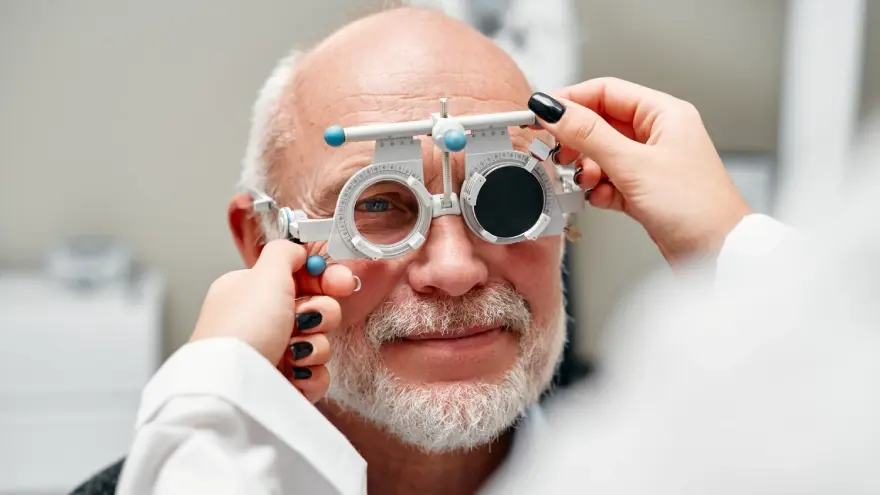
The Presbyopia Precision Examination Program is a specialized diagnostic evaluation designed to thoroughly assess eye health, corneal condition, and refractive index before prescribing presbyopia correction or laser vision procedures.
Learn More