Specialized Ophthalmology in Seoul · Dedicated International Patient Concierge
MOHW Registered · Foreign Patient Care
en-US


Medical Guide
LASIK Package Inclusions Korea: What a Quote Should Cover
LASIK package inclusions in Korea: what the pre-op exam, consultation, procedure, drops and follow-up visits each cover, and how to get an itemized quote.
Schedule a ConsultationWhat's Actually Included in a Vision Correction Package Price?
Medically reviewed by Dr. Kim Byoung Jin, Board-certified ophthalmologist (Korean Ophthalmological Society)
People who search for "LASIK package inclusions Korea" are usually trying to solve one problem: they have been handed a single figure and cannot tell what sits underneath it. This article contains no figures, and it does not tell you what Jamsil Samsung Eye Clinic puts inside a package, because the clinic has published neither. What it does instead is take the quote apart — examination, consultation, operation, medications, follow-up visits — and explain what each component clinically is. Then you can ask for them by name and get an answer that means something.
Two things this article deliberately does not claim
The first is any amount. Across its vision-correction line, every cost field in the clinic's US-market documentation is still waiting on confirmation, and its payment arrangements for American patients are open in exactly the same way.
The second is more unusual, and it is why this article exists. What is missing is not only the figure — it is the list the figure would be attached to. Jamsil Samsung Eye Clinic has not published what its packages contain, so there is no documented set of inclusions for anyone to reproduce. Nothing below says the clinic bundles a particular item or bills it separately; that question has one reliable answer, and it comes from the clinic in writing, addressed to your case.
What can be explained is the anatomy of the thing. Each component below is a real part of refractive care with a real clinical function, and knowing what each does turns a vague request for a price into one a clinic can answer precisely.
The pre-operative examination decides what is even possible
Refractive surgery treats refractive errors — the conditions in which the eye does not focus light onto the retina correctly. MedlinePlus, from the US National Library of Medicine, groups the common ones as nearsightedness, farsightedness, astigmatism, and presbyopia. The National Eye Institute describes nearsightedness as light focusing in front of the retina, and refractive surgery as reshaping the cornea so it lands where it should.
That reshaping consumes corneal tissue, which is why measurement comes before anything else. The examination is answering three separate questions at once:
- Is there enough cornea, and is it the right shape? The clinic documents corneal topography — a detailed map of the cornea's curvature — assessment of both corneal surfaces, and pupil-size measurement under different lighting, since pupil behavior in darkness affects night-vision symptoms such as glare and halos.
- Has the prescription stopped moving? The clinic's general criteria describe adults aged eighteen and older whose vision has been stable for approximately six months, with adequate corneal thickness and healthy eyes.
- Is the rest of the eye healthy? Retinal and optic-nerve assessment is part of the documented pre-operative testing, because an eye with an untreated problem behind the cornea is not a candidate for a procedure performed on the cornea.
The exclusions are equally concrete. The clinic documents that people under eighteen, anyone whose prescription has changed within the past six months, and anyone pregnant or within three months of finishing breastfeeding are not suitable. Elsewhere it lists active eye infection, keratoconus (a progressive thinning and bulging of the cornea), severe dry eye and insufficient corneal thickness among reasons to postpone or rule out surgery.
A preparation step also catches travelers out. Contact lenses temporarily change corneal shape, so they have to be stopped before measurement: the clinic's documented intervals run seven days for soft lenses, fourteen for toric soft or rigid gas-permeable lenses, and one month for orthokeratology lenses. The American Optometric Association treats every kind, purely cosmetic ones included, as a prescription medical device with a prescription that generally expires annually. If your lens history is not reported accurately, the map the surgeon plans from is not accurate either.
The clinic describes this examination as taking approximately two hours, and it dilates the pupils, which is why it advises against driving yourself afterward. None of that is a formality: it determines whether you can have surgery at all and which procedure applies. The US Food and Drug Administration's LASIK guidance stresses understanding the procedure's limits and evaluating candidacy carefully rather than treating surgery as a foregone conclusion.
Corneal thickness sets a ceiling on how much tissue a laser can safely remove, which is what makes a surface treatment or a lens-based approach relevant for some eyes and not others. Pupil size in low light bears on night-vision symptoms, so it shapes the counseling as much as the technique.
Those measurements are why a quote issued beforehand is an estimate for an assumed operation. Nobody is being evasive in declining to firm it up; the information that would fix the figure does not exist yet.
The consultation is a separate appointment from the examination
These two are often collapsed into one word, and they are not the same activity.
The examination generates data. The consultation is where a surgeon interprets that data against your prescription, eye anatomy, occupation and tolerance for particular trade-offs, then recommends an approach. The clinic documents a one-to-one doctor consultation after comprehensive pre-operative testing in at least one of its laser pathways, and its representative director, Dr. Kim Byoung Jin, a board-certified ophthalmologist, is documented as personally managing his own patients' care before and after surgery.
For a US reader this appointment carries extra weight: it is the only point at which you can assess the person who will operate, and the FDA's guidance directs patients toward careful surgeon selection and realistic expectations.
Whether a consultation is charged for, and whether any charge is later credited against the procedure, is a billing question rather than a clinical one. Ask it before you fly, through one of the clinic's documented remote channels: telephone, online reservation, or an email reply request.
"A vision correction package" is not a single product
This is the point at which most package comparisons quietly break down.
Jamsil Samsung Eye Clinic documents several distinct vision-correction approaches:
- Clear Smile LASIK, a flapless method in which a femtosecond laser shapes a disc of tissue (a lenticule) inside the cornea, removed through an incision the clinic describes as approximately two millimeters.
- LASIK and LASEK. LASIK raises a corneal flap and applies the laser beneath it; LASEK removes the surface epithelium instead, then places a protective contact lens while that layer regrows.
- Corneal Strengthening LASEK, adding corneal cross-linking: riboflavin, a form of vitamin B2, is absorbed into the tissue and activated with ultraviolet-A light to stiffen it.
- High Premium LASEK, a surface treatment described as an option for some patients with relatively thin corneas and moderate to high nearsightedness.
- Z8 Premium LASIK, a lenticule-based approach guided by real-time optical coherence tomography imaging.
- 1-Day Vision Correction Surgery, compressing examination, procedure and post-operative check into a short schedule for qualifying candidates.
- EVO AQUA ICL, an implantable Collamer lens positioned between the iris and the natural lens, correcting vision without removing corneal tissue.
These are clinically different operations consuming different resources. A surface procedure involves a protective bandage lens and a longer epithelial healing phase; a cross-linked procedure adds a treatment step with its own materials; a lens-based procedure involves an implant specified for one eye. A quote for one tells you little about a quote for another. More importantly, the choice is generally not yours to make from a menu: the clinic's comparison material presents LASEK as an option when corneas are relatively thin, and implantable lens surgery as a route for people whose corneas make laser correction unsuitable. Candidacy leads; preference follows.
One caution on equipment. Its documented laser platforms are a Ziemer Femto LDV Z8 femtosecond system and a Zeiss MEL 90 excimer system. The FDA's role here is to regulate lasers — approval attaches to devices, not to clinics or surgeons — and availability in Korea is not a statement about US regulatory standing. Do not let a brand name in a package description stand in for either fact.
The Centers for Disease Control and Prevention makes a related point in its Yellow Book chapter on medical tourism: a hospital or clinician outside the United States will not necessarily hold accreditation measured against American benchmarks, so checking a particular clinic's standing is preparation you do yourself. A package description is a commercial document, not evidence about accreditation.
Medications after surgery are part of the treatment
Eye drops sound like an accessory. Clinically they are closer to the second half of the procedure.
The clinic's documented aftercare instructs patients to use prescribed antibiotic and anti-inflammatory drops as directed, to use artificial tears and take screen breaks during early recovery, and to avoid rubbing the eyes. Antibiotic drops address infection risk in a healing cornea. Anti-inflammatory drops manage a response that, left unchecked, can affect the visual result. Artificial tears address the dryness common after refractive surgery while corneal nerves recover.
After a surface procedure such as LASEK, the clinic also describes placing a protective contact lens while the epithelium regenerates — a device worn for days and removed by the doctor, not by you. Separately it describes a SMART program covering mitomycin use to reduce corneal haze and myopic regression, accelerated recovery, and care before and after surgery. That is the clinic's own description rather than a verified outcome, and it sets out a care model, not a billing arrangement.
The practical questions are specific ones. How long does the prescribed course run? Are the drops dispensed at the clinic or written as a prescription you fill elsewhere? If the course outlasts your trip, can it be continued at home, and under whose supervision? A course of medication that ends the day you board a plane is not a complete course.
Follow-up visits set your return date
For a patient who lives across town, follow-up appointments are a minor inconvenience. For a patient flying in from the United States, they determine the length of the trip — and are therefore the largest unknown in the plan.
Follow-up visits do real clinical work. They measure how vision is recovering, examine corneal healing, and catch early complications while they are still small. After a surface procedure, one visit exists specifically to remove the protective lens once the epithelium has closed. After an implantable lens procedure, the clinic documents a pressure check on the day of surgery. Its aftercare guidance also asks patients to keep every scheduled follow-up, wear a sleep shield nightly for the first week, and use protective eyewear outdoors for several months.
Here is the part to act on: the clinic has not published its follow-up schedule, and duration and visit requirements are recorded as needing confirmation across its vision-correction procedures. Make it your first question — the answer sets your return flight, your accommodation, and your time away from work.
One point from outside the clinic belongs here. The US Department of State states that the US government does not pay travelers' medical bills abroad, so an extra week in Seoul lands on you. That is not a reason to avoid care overseas. It is a reason to know the follow-up schedule before booking a return flight around it.
Package pricing and itemized pricing do different jobs
A bundled figure and an itemized breakdown are both legitimate ways to present the same care, and each fails in a different direction.
A package is easier to plan around: one figure, one decision. Its weakness is silence about omissions — a bundle tells you what it costs, not what it leaves out, and an item never mentioned looks exactly like an item included.
An itemized quote is harder to read and more honest. Every line is a component someone decided to name, and the gaps are visible. It also leaves you holding a record, which is worth more than it sounds: a line-by-line statement lets you check afterward that you were billed for what you agreed to, and it is what a doctor at home can read to see what was done.
The comparison method follows from this. Two quotes are comparable only when they cover the same list of components, so do not compare figures first. Build one list, send it to both clinics, and ask each to state, for every line, whether it is included, excluded, or conditional.
Send identical wording to each clinic, because a component described two different ways comes back as two answers that cannot be lined up, and ask for those three labels rather than comment in prose. Then read the conditional lines first. That is where two quotes genuinely differ, and where your own case decides the outcome. A conditional line is not a warning sign; it is a clinic telling you which part of the plan still depends on facts nobody has yet.
The list to send, in writing
Ask for each of these explicitly, and ask for the answer in writing:
- The pre-operative examination: which tests it covers, and whether it is billed if you turn out not to be a candidate.
- The consultation with the operating surgeon, and whether any charge is credited against the procedure.
- Which procedure the quote assumes, and what changes if the examination points elsewhere.
- The procedure itself, including anesthetic drops and consumables such as a bandage lens or an implant.
- Any additional treatment step, such as cross-linking, and whether it is priced separately.
- Post-operative medications: which drops, for how long, and whether dispensed or prescribed.
- The number and timing of follow-up visits, and the minimum stay they imply.
- What happens if you need an extra visit, a re-check, or further treatment.
- Whether records are provided in English for a doctor at home.
Send it through the clinic's contact page, the route it names for American inquiries. Writing beats calling here, and not only because of the clock: a list this specific needs an answer you can set beside another clinic's and read line against line.
Two notes. The clinic documents four named ophthalmologists, and background on the practice sits on its about page. And its records leave the working detail of English-language service open, so add that to the list rather than taking it as read.
The Bottom Line
- Jamsil Samsung Eye Clinic has published neither prices nor package contents, so an itemized quote addressed to your case is the only reliable answer about what is included.
- The pre-operative examination is not administrative. It decides candidacy and which procedure applies, which is why a quote issued before it is provisional.
- The clinic documents several clinically distinct procedures, from flapless lenticule methods to surface treatments with cross-linking to an implantable lens. "A package" is not one product.
- Post-operative drops are part of the treatment. Ask how long the course runs and whether it can be continued after you fly home.
- The follow-up schedule is unpublished and matters most to travelers, since it sets the length of the trip. Ask for it before you price a return flight.
Frequently Asked Questions
Does Jamsil Samsung Eye Clinic publish what its vision correction packages include?
No, and that is the more important gap. Its documentation carries no inclusion list at all, and every vision-correction cost field in it is still awaiting confirmation, so neither the contents nor the figure has a published answer. Request an itemized quote addressed to your own case rather than relying on any list attributed to the clinic elsewhere.
Why can't a clinic give me a firm quote before the examination?
Because the examination determines which procedure you are a candidate for, and different procedures involve different steps and materials. Corneal thickness and shape, prescription stability, and the health of the retina and optic nerve all feed that decision. A pre-examination figure is an estimate for an assumed procedure, and the assumption may not survive the measurements.
What's the difference between the consultation and the pre-operative examination?
The examination collects measurements: corneal topography, pupil size under different lighting, refraction, overall eye health. The consultation is where a surgeon interprets them and recommends an approach, and where you assess the surgeon. The FDA's LASIK guidance emphasizes careful surgeon selection and realistic expectations, both of which belong to the consultation rather than the test results.
Are post-operative eye drops usually treated as part of surgical care?
Clinically they are integral: antibiotic drops reduce infection risk in a healing cornea, anti-inflammatory drops control the healing response, and artificial tears manage post-surgical dryness. How a clinic bills them is a separate question, and this one has not published its arrangement. Ask which drops are prescribed, how long the course runs, and whether it can continue at home.
How many follow-up visits will I need in Korea?
The clinic records duration and visit requirements as needing confirmation, so no published answer exists. Because follow-up visits set the length of your stay, ask it first. Surface procedures involve a visit to remove a protective lens and lens-based procedures involve pressure monitoring, so the answer varies.
How do I compare a bundled quote against an itemized one?
Do not compare totals first. Write one list of components and ask both clinics to mark each line as included, excluded, or conditional. Only once both replies cover identical ground are the two figures describing the same thing.
This article is for general informational purposes and does not constitute individualized medical advice. Surgical candidacy, technique, and expected outcomes can only be determined through a consultation with a qualified ophthalmologist, and this article is not a self-diagnosis tool.
More Articles
Continue reading our clinical ophthalmology guides.
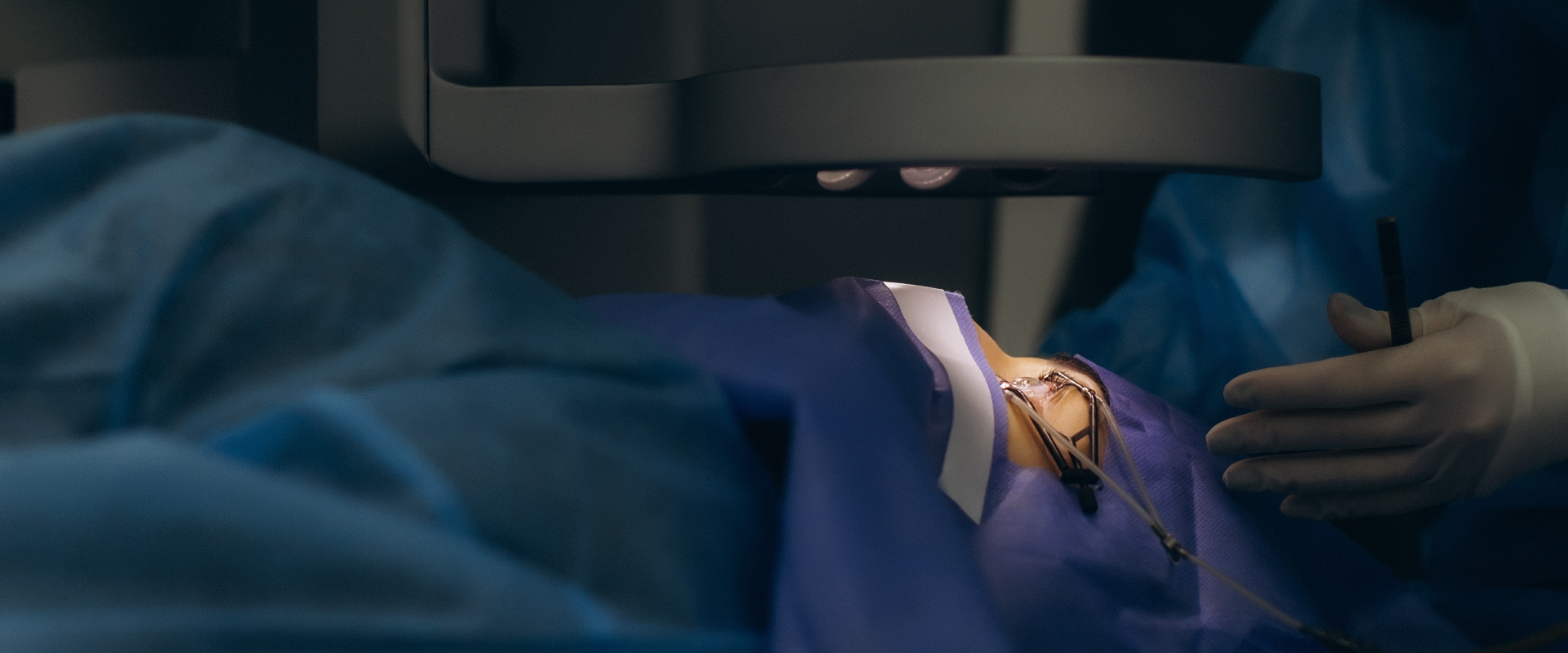
LASIK Cost Korea vs US: How Each System Sets Prices
LASIK cost in Korea vs the US differs because each system treats vision correction as elective. How pricing is structured, and how to request a real quote.
Learn More
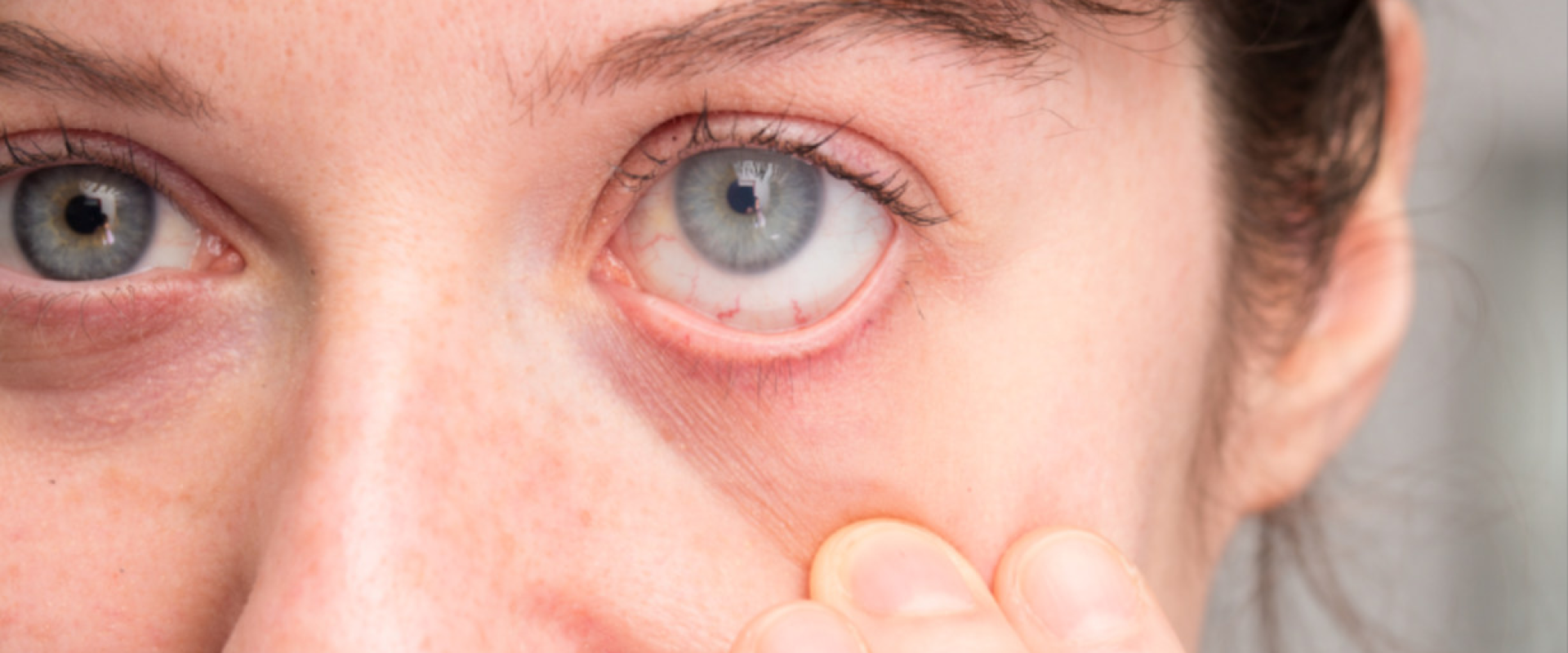
Dr. Kim Byoung Jin: Ophthalmologist in Seoul, Korea
Dr. Kim Byoung Jin is a board-certified ophthalmologist and representative director at Jamsil Samsung Eye Clinic, Seoul. His training and focus, explained.
Learn More

Book an Online Consultation: Korea Eye Clinic Guide
Book an online consultation with a Korea eye clinic: the channels this Seoul practice documents, the time-zone arithmetic, and what to assemble up front.
Learn More