Specialized Ophthalmology in Seoul · Dedicated International Patient Concierge
MOHW Registered · Foreign Patient Care
en-US

Medical Guide
Dr. Cha Deok Sun: Cataract Surgeon and ESCRS Awardee
Dr. Cha Deok Sun is a cataract surgeon at Jamsil Samsung Eye Clinic in Seoul. His ESCRS-awarded corneal research and 2018 IOL patent, explained plainly.
Schedule a ConsultationDr. Cha Deok Sun and the Research Behind Safer Cataract Surgery
Medically reviewed by Dr. Cha Deok Sun, Board-certified ophthalmologist (Korean Ophthalmological Society)
Dr. Cha Deok Sun is an ophthalmologist and director at Jamsil Samsung Eye Clinic in Songpa-gu, Seoul, specialising in cataract surgery, presbyopia surgery, and vision correction. He is a board-certified ophthalmologist with the Korean Ophthalmological Society and holds a Ph.D. In 2016 his research on protecting the cornea during cataract surgery took second place in the poster competition of the European Society of Cataract and Refractive Surgeons, and in 2018 he was granted a patent for an intraocular lens.
That last paragraph is a list of credentials. This article explains what they actually mean for someone weighing up cataract surgery — including why a study on corneal cells in rabbit eyes has a direct bearing on how your own eye is likely to feel a month after surgery.
Who is Dr. Cha Deok Sun?
Dr. Cha Deok Sun is listed as Director and Ophthalmologist, Ph.D. at Jamsil Samsung Eye Clinic, and as a board-certified ophthalmologist with the Korean Ophthalmological Society.
His medical training runs through two of Korea's major teaching hospitals. He completed his ophthalmology residency at Korea University Hospital, then a fellowship in cornea and cataract surgery at Seoul National University. Before joining Jamsil Samsung Eye Clinic he served as Chief Physician at Pyeongtaek Kim Eye Hospital and as a dedicated ophthalmic surgeon at Cheonho ELC Eye Clinic.
Three specialties are explicitly listed in his profile:
- Presbyopia surgery
- Cataract surgery
- Vision-correction and refractive surgery
The pairing of cornea with cataract in his fellowship is worth noticing. Cataract surgery happens inside the eye, at the lens. The cornea is the clear window in front of it. A surgeon trained in both is trained to think about what the lens operation does to the window it has to pass through — which is precisely the subject of his award-winning research.
What is a cornea and cataract fellowship?
A fellowship is subspecialty training taken after a physician has already completed residency and become an ophthalmologist. Residency produces a general eye specialist. A fellowship narrows the focus to one region or one class of disease, typically for one to two years of concentrated surgical and clinical work.
Cornea and cataract is one of the standard fellowship tracks. It covers the corneal surface and its diseases, corneal transplantation, the mechanics of the eye's natural lens, phacoemulsification technique, and the selection and behaviour of intraocular lenses. In the United States the equivalent training pathway is described by the American Academy of Ophthalmology among others; the structure is similar in Korea.
For a patient, the useful question is not whether a surgeon did a fellowship but whether the fellowship matches the operation being proposed. For cataract surgery, cornea and cataract is a direct match.
What was the 2016 ESCRS research about?
The study documented in his profile is titled "Effects of Senofilcon A Mechanical Protector on Corneal Endothelial Cells During Phacoemulsification in Rabbit Eyes." It was presented as a poster at the 2016 congress of the European Society of Cataract and Refractive Surgeons and placed second in the poster competition.
Unpacked into plain language, it asks a specific and practical question: during cataract surgery, can a thin physical barrier placed inside the eye shield the delicate inner layer of the cornea from the energy used to break up the cataract?
- Senofilcon A is a silicone hydrogel material used in soft contact lenses. Here it is used not as a lens but as a mechanical protector — a shield.
- Phacoemulsification is the standard cataract technique: an ultrasonic probe vibrates at high frequency to emulsify the cloudy lens so it can be aspirated out through a very small incision.
- Corneal endothelial cells form a single layer on the inner surface of the cornea. Their job is to pump fluid out of the corneal tissue and keep it clear.
- Rabbit eyes are a conventional preclinical model for this kind of question, used precisely because you cannot test a protective device on human patients first.
The study design implies its own limitation, and it is an important one: this was animal-model research, not a human clinical trial. It tests a mechanism. It does not establish a routine clinical practice.
Why do corneal endothelial cells matter so much?
Because you do not get more of them. The endothelium has extremely limited capacity to regenerate, so the cells you have at 60 are, broadly, the cells you keep. They maintain corneal clarity by continuously pumping fluid out of the cornea. When their density falls too far, the cornea takes on water, swells, and clouds — and vision goes hazy even though the cataract itself was removed successfully.
Phacoemulsification is known to cost some endothelial cells. The ultrasonic energy, the fluid turbulence, and fragments of the lens moving inside a confined space all contribute. Modern technique is largely a story of reducing that cost: less energy, better fluidics, protective agents, shorter operating times.
This is an active research question, not a settled one. A randomised clinical trial published in the peer-reviewed literature — the PERCEPOLIS trial on endocapsular versus supracapsular phacoemulsification — compared endothelial cell loss between two different surgical approaches in human patients, which gives a sense of how carefully the field measures this single variable.
Understood in that context, Dr. Cha Deok Sun's poster is not a marketing trophy. It is a contribution to a specific, measurable safety question that cataract surgeons argue about at congresses.
What is the 2018 intraocular lens patent?
His profile records a 2018 patent for an intraocular lens used in cataract surgery.
An intraocular lens, or IOL, is the artificial lens implanted to replace the natural lens once the cataract is removed. It is permanent. Its optical design determines whether a patient sees best at distance, at near, or across a range — and design differences are exactly what patents cover.
The clinic does not publish the patent's technical claims or its jurisdiction, so this article cannot tell you what the lens does differently. What the patent does establish is that his engagement with IOL technology extends past selecting from a catalogue into designing within it.
What does cataract surgery involve at the clinic?
The clinic describes cataract surgery as removing the eye's clouded natural lens by phacoemulsification, using the ALCON INFINITI ultrasound system, and replacing it with a clear intraocular lens. It is performed as a same-day procedure under topical or local anaesthesia, and the clinic states that the operating surgeon handles the follow-up.
The published pathway has five steps:
- Precision examination and IOL selection
- Topical or local anaesthesia
- Phacoemulsification and IOL implantation, approximately 15–20 minutes per eye
- Same-day discharge
- Post-operative checks and eye drops
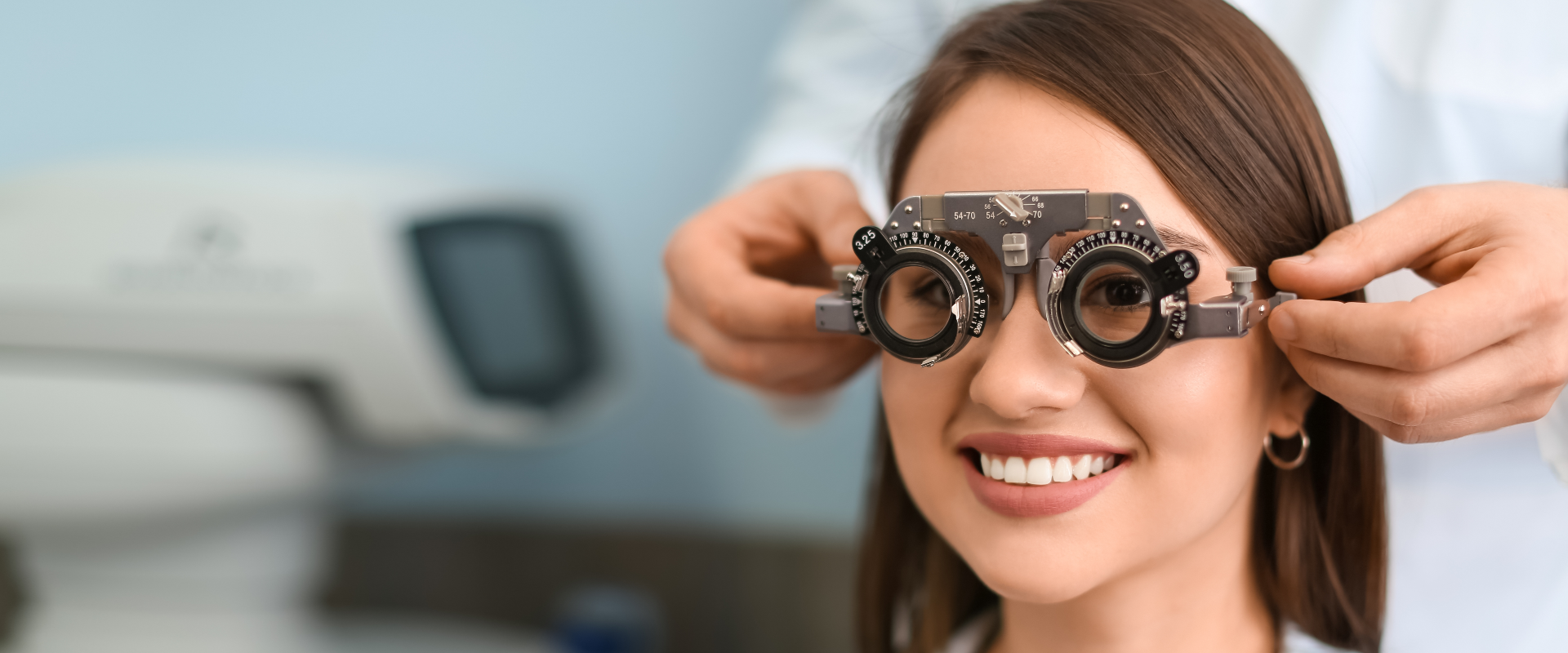
Diagnostic evaluation before surgery includes a visual acuity test, a slit-lamp microscopic examination of the lens and internal structures, and intraocular pressure measurement. Named equipment includes the ALCON INFINITI phacoemulsification system, premium multifocal IOLs, precision biometry devices for measuring the eye, and a laser-assisted option.
Anaesthesia is usually anaesthetic eye drops, and the clinic states that patients typically experience little or no pain during the procedure. The surgery itself is generally 15–30 minutes per eye and is performed on an outpatient basis.
The National Eye Institute's overview of cataracts and cataract surgery is a useful non-commercial second reference for anyone comparing what they are told in a consultation against a neutral baseline.
How long does recovery take?
According to the clinic, most patients notice vision improving within a few days, with complete healing generally taking about four to six weeks. Functional vision returns within days; the final refraction settles over weeks.
The aftercare protocol is specific:
- Use the prescribed eye drops as directed
- Do not rub the eye
- Wear the protective eye shield if advised
- Avoid heavy lifting and swimming during early recovery
- Attend all scheduled follow-up visits
If a multifocal lens is implanted, there is an additional adjustment period. Neuroadaptation — the brain learning to interpret the lens's multiple focal points — can take weeks to months. That is normal, and being told about it in advance is a reasonable expectation of an honest consultation.
What are the realistic limits and risks?
The clinic states the goal plainly: permanent removal of the cataract, with potential spectacle independence when a multifocal IOL is used. It also states the limitations, which matters more.
Documented limitations and risks include:
- Possible halos and glare, particularly with multifocal lenses
- A neuroadaptation period after multifocal implantation
- Later posterior capsule opacification, a clouding of the membrane behind the implanted lens that can occur months or years afterwards and is treated separately
- Infection, bleeding, inflammation, increased eye pressure, corneal swelling, temporary blurred vision, and retinal detachment — described as uncommon but possible
Some patients should not proceed immediately. The clinic lists uncontrolled eye infection, active eye inflammation, and medical conditions that should be stabilised first as reasons to postpone surgery.
Alternatives exist and should be discussed rather than skipped: a monofocal IOL combined with reading glasses, or extended-depth-of-focus and monovision strategies. Mild cataracts may reasonably be monitored rather than operated on, with surgery considered when vision meaningfully interferes with daily life. Globally, cataract remains one of the leading causes of vision impairment, as set out in the World Health Organization's World report on vision.
How is presbyopia handled alongside cataract surgery?
Presbyopia surgery is the first specialty listed in Dr. Cha Deok Sun's profile, and in practice it often overlaps with cataract work. Presbyopia is the age-related loss of near focusing ability that typically becomes noticeable from the mid-forties. Because cataract surgery replaces the natural lens anyway, it creates an opportunity to address both at once.
The clinic runs presbyopia care as its own service line, including presbyopia and cataract lens implantation, laser presbyopia and cataract combined surgery, and a Presbyopia Precision Exam Program. Clareon PanOptix Pro is among the named premium lenses it offers.
That precision exam has a preparation requirement patients often miss. Contact lenses must be left out beforehand so the cornea returns to its natural shape — soft lenses for about a week, hard or orthokeratology lenses for two to three weeks. Measurements taken on a temporarily reshaped cornea will point to the wrong lens.
The exam is also used to compare options rather than assume one. Alternatives evaluated include laser presbyopia correction, multifocal intraocular lens insertion, orthokeratology lenses, and conventional corrective glasses.
What about surgery on an eye that has already been operated on?
The clinic also documents cataract revision surgery, which addresses problems after a previous cataract operation — an intraocular lens that has shifted or fully dislocated, residual refractive error, or other complications.
The approach is decided from the examination. If the lens is partially displaced it may be repositioned using scleral fixation, a technique that anchors the lens to the eye wall. If it has fully dislocated, it is removed and a new lens implanted. If refractive error remains, IOL replacement or LASIK may be considered.
Two figures matter for planning. Revision surgery generally takes 30–90 minutes rather than 15–30, and the clinic advises that international patients typically allow five to ten days for surgery plus follow-up. Recovery is correspondingly longer, with vision stabilising over roughly four to eight weeks.
Cataract surgery can also be combined with other procedures when clinically indicated — astigmatism-correcting lens placement, glaucoma drainage procedures, or combined vitreo-retinal surgery where a retinal condition coexists.
Which professional bodies is he a member of?
Dr. Cha Deok Sun is recorded as a full member of:
- The Korean Ophthalmological Society and the Korean Ophthalmologists Association
- The Korean Society of Cataract and Refractive Surgery
- The American Society of Cataract and Refractive Surgery (ASCRS)
- The European Society of Cataract and Refractive Surgeons (ESCRS)
- The Korean Contact Lens Society and the Korean Optometric Society
The pattern here is consistent rather than decorative: every one of those bodies is concerned with the lens, the cornea, or refractive correction. Both ASCRS and ESCRS run large annual meetings and publish continuing-education material — the ESCRS education programme is public — which is where research like his 2016 poster is presented and challenged.
Membership demonstrates participation in a subspecialty community. It is not a certification, and it should not be presented as one.
What has the clinic not confirmed?
The clinic's own documentation marks several details as awaiting confirmation, and it is worth knowing which:
- Years of experience
- Procedure volume, both overall and doctor-level
- Teaching and mentoring activity
- A published doctor philosophy or approved patient-facing quotes
- Cost ranges for cataract surgery and revision surgery
- Payment options for US patients
- A named English-speaking international coordinator
The clinic does state that in-house English support covers inquiry, consultation, surgery day, aftercare and emergency contact, and that translated documents are available. Its consulting hours are Monday to Thursday 09:30–19:00 KST, Friday 09:30–20:00 KST, and Saturday 09:00–13:00 KST, with a 13:00–14:00 lunch break, closed Sundays and public holidays. You can read the clinic's own background on its About Us page, and consultations are arranged through its contact page.
What should a US patient ask about cataract surgery in Korea?
The clinic's own list of common international enquiries maps closely onto what a careful consultation should cover. For cataract surgery specifically, the questions that change the answer most are:
- Which IOL is being recommended for me, and what does it trade away?
- What did my biometry measurements show, and how were they used to choose the lens power?
- Will one eye be done at a time, and how far apart?
- How many follow-up visits does the surgeon consider essential before I fly home?
- What happens if posterior capsule opacification develops after I return to the United States?
- What is the plan if the refractive result is not what was targeted?
- What is the total cost, in what currency, and what does it include?
The first two questions are the ones that separate a considered surgical plan from an off-the-shelf one. Lens selection is where cataract surgery is either personalised or not.
The Bottom Line
- Dr. Cha Deok Sun is a board-certified ophthalmologist (Korean Ophthalmological Society) and director at Jamsil Samsung Eye Clinic, specialising in cataract, presbyopia and vision-correction surgery.
- He completed his ophthalmology residency at Korea University Hospital and a cornea and cataract fellowship at Seoul National University — training that matches cataract surgery directly.
- His 2016 ESCRS poster on protecting corneal endothelial cells during phacoemulsification placed second in the society's poster competition; it was animal-model research, and a 2018 intraocular lens patent followed.
- The clinic performs cataract surgery by phacoemulsification with the ALCON INFINITI system, 15–30 minutes per eye as a same-day procedure, with healing generally complete in about four to six weeks.
- Procedure volume, years of experience and cost are not published — ask for them directly, and settle the follow-up plan for after you fly home before you book.
Frequently Asked Questions
What exactly did Dr. Cha Deok Sun's award-winning study test?
It tested whether a mechanical protector made of senofilcon A, a soft contact lens material, could shield the corneal endothelial cells from damage during phacoemulsification. The work was carried out in rabbit eyes and presented as a poster at the 2016 ESCRS congress, where it placed second.
Does that research mean my cataract surgery will be safer?
Not directly, and the clinic makes no such claim. The study was preclinical animal-model research into a protective mechanism, not a human trial establishing a routine technique. What it reasonably tells you is that the surgeon has engaged seriously with corneal safety during lens surgery.
Why do surgeons care about corneal endothelial cells during cataract surgery?
These cells keep the cornea clear by pumping fluid out of it, and they have very limited ability to regenerate. If too many are lost, the cornea can swell and cloud, blurring vision even after a technically successful cataract removal. Reducing that loss is a core aim of modern technique.
How long does cataract surgery take at Jamsil Samsung Eye Clinic?
The clinic states 15–30 minutes per eye, performed as an outpatient same-day procedure under topical or local anaesthesia, with the surgical sequence described as precision examination and IOL selection, anaesthesia, phacoemulsification with IOL implantation, same-day discharge, then post-operative checks and drops.
Will I still need glasses afterwards?
That depends on which intraocular lens is implanted. The clinic describes potential spectacle independence with a premium multifocal IOL, while a monofocal lens is typically paired with reading glasses. Multifocal lenses carry their own trade-offs, including possible halos and glare and a neuroadaptation period.
What is posterior capsule opacification?
It is a clouding of the thin membrane left behind the implanted lens, which can develop months or years after otherwise successful cataract surgery and cause vision to blur again. The clinic lists it as a known later limitation of lens implantation and treats it as a separate procedure.
How long should I stay in Korea for cataract surgery?
The clinic does not publish a fixed stay for primary cataract surgery, but it does advise five to ten days for revision surgery plus follow-up, and it recommends follow-up visits the day after surgery and again several weeks later. Agree the minimum stay with the surgeon before booking flights.
Can Dr. Cha Deok Sun operate on an eye that has already had cataract surgery?
The clinic documents cataract revision surgery for dislocated or incorrectly powered intraocular lenses and for residual refractive error, using scleral fixation, lens exchange, or LASIK depending on the findings. These are described as more complex cases requiring individual evaluation.
This article is for general informational purposes and does not constitute individualized medical advice. Surgical candidacy, technique, and expected outcomes can only be determined through a consultation with a qualified surgeon.
More Articles
Continue reading our clinical ophthalmology guides.
LASIK Cost Korea vs US: How Each System Sets Prices
LASIK cost in Korea vs the US differs because each system treats vision correction as elective. How pricing is structured, and how to request a real quote.
Learn More

Dr. Kim Byoung Jin: Ophthalmologist in Seoul, Korea
Dr. Kim Byoung Jin is a board-certified ophthalmologist and representative director at Jamsil Samsung Eye Clinic, Seoul. His training and focus, explained.
Learn More

Book an Online Consultation: Korea Eye Clinic Guide
Book an online consultation with a Korea eye clinic: the channels this Seoul practice documents, the time-zone arithmetic, and what to assemble up front.
Learn More